It wasn’t what anyone expected.
John 9:1-2
"As he went along, he saw a man blind from birth. 2 His disciples asked him, “Rabbi, who sinned, this man or his parents, that he was born blind?"
And then Jesus spoke: "Go. Wash in the Pool of Siloam."
A man born blind — never once having seen a sunrise, his mother's face, or the color of the sky — sat in his familiar darkness. He had learned to navigate the world through sound and touch. The shuffle of sandals on stone. The warmth of sunlight on skin he could feel but never trace back to its source. This was his whole world. And it was the only world he had ever known.
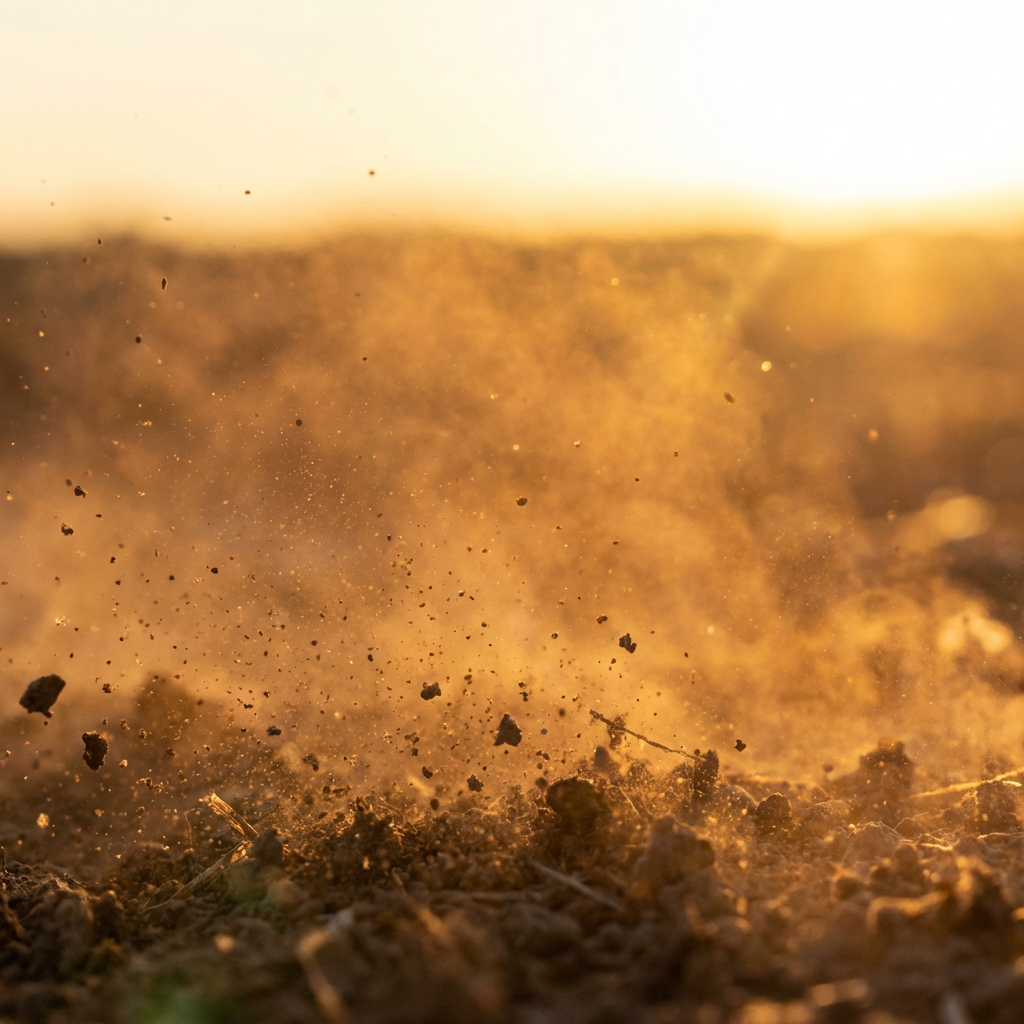
When the Son of God approached, He didn't call down fire from heaven. He didn't speak a single commanding word into the air. He bent low — God incarnate, crouching toward the ground — and He spat into the dust.
Think about that for a moment. The One through whom all things were made reached into the dirt of a Jerusalem street. He worked it slowly with His fingers, pressing saliva into dry earth until it yielded, until it softened, until it became something moldable in His hands. It would have had weight to it — that particular heaviness of wet clay. It would have smelled earthy and raw, ancient almost, like something pulled up from the ground after rain. And then, with intention and tenderness, Jesus pressed that mud — cool, dense, and gritty — across the man's eyes.
Imagine the sensation. The cold shock of it against skin that had never seen light. The weight of mud settling into the hollows of eyes that had only ever known darkness. There was nothing comfortable about this moment. Nothing polished or ceremonial. This was tactile, intimate, and strange.
And then Jesus spoke: "Go. Wash in the Pool of Siloam."
That was it. No further explanation. No promise of what would happen when he got there. Just — go.
So he went.
He didn't ask questions. He didn't wait for certainty. With mud still pressed against his eyes — unable to see even the shadows he might have detected before — he began to move.
Think about what that walk required.
The city of Jerusalem was not quiet. It was loud and crowded with the particular noise of a feast day — vendors calling out, children underfoot, the low rumble of conversation in every direction. People who knew this man would have stared. Some may have reached out to steady him. Others would have watched with the particular cruelty of those who had long since decided his blindness was judgment, not circumstance. He knew their voices. He had been hearing their assessments his whole life.
And now he was moving through all of it with clay pressed against his face.
He couldn't see the uneven stone beneath his feet. He couldn't see when the path narrowed or widened, when a cart was being pulled across his route, or when a crowd had gathered ahead. Every step required him to feel for what he could not see — to trust the ground to hold him, to trust his own body's memory of a city he had never actually seen. And underneath all of it, pressing against everything else, was a question he couldn't answer yet: Would this actually work?
Jesus hadn't promised him anything. He had simply told him where to go.
So the man moved forward. Step by step. Clay on his face. Faith in his chest. The Pool of Siloam wasn't steps away — it was a journey, and he made it in the dark.
And when he finally knelt at that water's edge, when his hands cupped the cool surface and brought it to his face — when he washed away the mud — the darkness didn't just lift.
Light came rushing in for the very first time.
He came back seeing.
Here is what stops me in this story: Jesus used the earth itself as His instrument. And this was no accident. When God first formed man, He pressed His hands into the dust of the ground and shaped something living from what was lifeless. Jesus, standing in that Jerusalem street, was doing something deeply familiar. He was finishing a work of creation that had been left incomplete since birth — not because God had forgotten this man, but because this moment had always been coming. "This happened so the power of God could be seen in him" (John 9:3).
The mud wasn't incidental. It was the method.
And the obedience wasn't optional. It was the miracle's pathway.
Maybe that's exactly where you find yourself today.
Maybe you've been praying for something for so long that the silence has started to feel like an answer. Maybe you've watched others move forward while you've remained in the same place — same situation, same questions, same ache. You've been waiting for a clean, unmistakable, instantly-visible move of God. And instead, He seems to be pressing something uncomfortable against the very place you cannot see.
Perhaps it's a marriage that feels beyond repair, and what God is asking of you right now isn't a breakthrough — it's another humble step toward the person you've been quietly resenting. Perhaps it's a calling that still hasn't opened, and the instruction feels less like a divine commission and more like another closed door. Perhaps it's grief that won't resolve on your timeline, and you're exhausted from carrying what you thought would be gone by now. Perhaps it's a body that isn't cooperating, a waiting room that never empties, a season that was only supposed to be temporary.
In all of these places, God often doesn't begin by explaining Himself. He begins by pressing something into the very spot that aches. And His instruction — maddening in its simplicity — is just: go.
Not go, and here is everything you need to know first. Not go, and I promise it will look the way you're hoping. Just — go. Move toward the thing I've pointed you toward. Take the next step with what's already in your hands. Trust that what I've pressed into you is purposeful, even when it feels like obscurity rather than anointing.
He is not absent in your waiting. He is working.
So here is the invitation: stop trying to wipe the mud away before you move.
The temptation — and it is a real one — is to demand clarity before obedience. To wait until the method makes sense, until the path is visible, until the weight on our eyes resolves into something we can explain to the people watching. But this man didn't wash at the place where Jesus found him. He washed at the place Jesus sent him. The miracle wasn't available at the starting point. It was waiting at the destination.
Your next step of obedience doesn't require you to see the whole road. It only requires you to take it.
The same hands that shaped Adam from dust — the same hands that knelt in the dirt of a Jerusalem street and worked mud with the same patient intention that formed the first human face — are forming something in your story too. Whatever He has pressed into the tender, unseeing places of your life, He put it there on purpose. You are not forgotten. You are not stuck. You are mid-journey, moving toward water you haven't reached yet.
Go to the pool. Wash. Trust Him with the steps you cannot see.
The miracle is not behind you. It's waiting at the water's edge.
Written by
Wes ShinnWes Shinn is a visual storyteller, photojournalist, filmmaker, and minister whose life and calling have been forged in some of the most demanding arenas a creative can inhabit.