The Adopted Son
Romans 8:15
"For you did not receive a spirit of slavery to fall back into fear, but you received the Spirit of adoption, by whom we cry out, ‘Abba, Father."
THE ADOPTED SON
& The Battle Against the Orphan Spirit
An Expanded Devotional on Sonship, Attachment, and Coming Home
For the Orphaned. For the Wounded. For the Searching.
Part One: Naming the Spirit
You Were Never Meant to Live This Way
There is a war that few people talk about openly, yet almost everyone has fought in it. It is not waged with weapons or words, though both may carry its wounds. It is waged in the deep places — in the hollow chest, in the middle-of-the-night waking, in the way you reach for love and then pull back before it can be given. It is the war of the orphan spirit.
The orphan spirit is not only for those who have lost parents to death or been surrendered to the foster care system, though they may know its weight most acutely. It is the spirit that takes root in anyone who has ever felt fundamentally unclaimed — passed over, dismissed, unseen, or conditionally loved. It is the belief, written so deep it functions like instinct, that you are on your own. That no one is coming. That love, if it exists at all, must be earned and carefully guarded.
It is the belief that you are an orphan — even when you are not.
The orphan spirit doesn’t announce itself. It whispers. And what it whispers sounds like survival.
This devotional is written for everyone who has ever lived from that place. Whether you were adopted as a child and grew up wondering why you were given away, or whether your biological family was physically present but emotionally absent — whether you experienced the abandonment of divorce, the quiet devastation of neglect, the shattering weight of abuse, the chronic disconnection of an anxious or avoidant attachment — if you have ever felt fundamentally alone in a world that moves around you, this is written for you.
And most importantly: this is written because there is a Father who has something specific to say about all of it.
Part Two: What the Orphan Spirit Looks Like
Recognizing the Architecture of Abandonment
Before we can receive healing, we have to be honest about the wound. The orphan spirit expresses itself in patterns that become so familiar they feel like personality. They aren’t. They are adaptations — brilliant, creative, painful adaptations — to a world that felt unsafe.
It looks like self-sufficiency that never asks for help, because asking is dangerous — asking means depending, and depending means you can be abandoned. It looks like perfectionism, because if you perform well enough, maybe you won’t be left. It looks like striving — relentless striving — because rest feels like failure and failure feels like proof of unworthiness.
It looks like people-pleasing so refined it has become invisible even to you. It looks like the inability to receive love without immediately questioning its motives. It looks like pushing people away just before they can get close enough to leave. It looks like staying in relationships far past the point of health, because abandonment feels worse than suffering.
It looks like competition and comparison, because the orphan spirit runs on scarcity — there is never enough love, approval, or belonging to go around, so others must be measured against you. It looks like suspicion of authority. It looks like isolation framed as independence.
Spiritually, the orphan spirit looks like a Christianity built entirely on duty and fear — serving God to avoid punishment, never quite believing He is genuinely pleased with you. It looks like a prayer life that feels transactional rather than relational, a worship that remains cerebral because the heart doesn’t dare feel seen. It looks like reading about the Father’s love without being able to receive it.
“Can a mother forget the baby at her breast and have no compassion on the child she has borne? Though she may forget, I will not forget you! See, I have engraved you on the palms of my hands.”— Isaiah 49:15-16
The orphan spirit is not your fault. It was not your choice. But by the grace of God and the work of His Spirit, it does not have to be your permanent address.
Part Three: The Science Behind the Wound
What Attachment Theory Tells Us — and Where It Falls Short
In the mid-twentieth century, British psychiatrist John Bowlby gave language to something the human heart had always known: we are wired for attachment. We are not designed for self-sufficiency. From the first moments of life, we are oriented toward connection — scanning for faces, reaching for warmth, crying out for nearness.
When that longing is consistently met, something profound forms in the nervous system: a secure base. The child learns, at a cellular level, that the world is safe enough, that caregivers are reliable, that it is okay to venture out because someone will be there when you return. This becomes the template through which all future relationships — including the relationship with God — are filtered.
But when attachment needs go unmet, the nervous system learns different lessons. It learns hypervigilance: scan the room, read the mood, anticipate rejection before it comes. Or it learns numbness: detach, need nothing, feel nothing, drift through connection without ever landing. Or it learns both in a terrifying cycle — anxious one moment, avoidant the next — a pattern that keeps love perpetually out of reach.
Science gave us the map. Scripture gives us the destination. And the Father is both.
Where attachment theory falls short is precisely where the gospel excels. Attachment theory can name the wound. It can trace its origins and map its patterns. What it cannot do — what no therapeutic framework can ultimately do — is re-father the fatherless. Only a Father can do that. And there is one who is willing.
Part Four: The Father You Were Made For
Why the Heart of God the Father Changes Everything
In the Western Church, we have sometimes drifted into a functional Unitarianism — not in doctrine, but in practice. We preach Christ faithfully. We teach the Spirit. But the Father often remains a blurry background figure, the theological equivalent of the distant patriarch who lets Jesus do the talking.
This is a tragedy. Not merely a theological error — a personal one. Because the Father is not distant. The Father is not disinterested. The Father is not even the stern judge waiting to be appeased by the Son’s sacrifice. The Father is the One who sent the Son precisely because He could not bear the distance between Himself and His children.
“For God so loved the world that he gave his one and only Son, that whoever believes in him shall not perish but have eternal life.”— John 3:16
That verse — so familiar it has lost its weight for many of us — is first and foremost a statement about the Father’s heart. It was the Father who loved. It was the Father who gave. The cross was not the Son overcoming the Father’s reluctance. It was the Son expressing the Father’s ferocious, costly, relentless love.
Jesus described the Father like this: a shepherd who leaves ninety-nine to find one. A woman who lights every lamp and sweeps every floor for a single lost coin. A father who sees his prodigal son while he is ‘still a great way off’ and runs — undignified, robe hiked up, sandals flying — runs toward him. Not because the son deserved it. Not because the son had figured things out. But because the father had never stopped watching. Had never stopped waiting. Had never stopped loving.
That is the Father you were made for. Not the cosmic scorekeeper. Not the divine demand-generator. The father who runs.
He sees you while you are still a great way off — and He runs.
For the person with an orphan spirit — for the one shaped by abandonment, neglect, anxious attachment, or the quiet devastation of never being enough — this portrait of the Father is not just theologically interesting. It is personally, neuronally, spiritually transformative.
Because the orphan spirit is ultimately a lie about the character of God. It says: no one is coming. It says: you must earn your place. The Father says something categorically different. He says: I engraved your name on my palms. I know the number of hairs on your head. Before you were formed, I knew you. Before you could perform, I chose you. Before you could prove anything, I loved you.
You don’t have to be an orphan anymore.
Part Five: The Spirit of Adoption
What Romans 8:15 Is Actually Saying
The Apostle Paul draws a sharp and stunning contrast. He says there are two spirits — two fundamental orientations of the soul — and only one of them is from God.
The spirit of slavery produces fear. It makes you run the math constantly: Am I good enough? Have I done enough? Will God be angry today? It is the treadmill of performance, the hamster wheel of merit. It is exhausting not because the demands are arbitrary, but because they are infinite — no amount of effort can satisfy a standard rooted in fear.
But the Spirit of adoption — the Spirit God actually gives — produces something entirely different. It produces the cry. The cry of Abba.
Abba is not the formal address of a servant to a master. It is the word a small child uses for their father. The closest English equivalent is ‘Daddy.’ Intimate. Familiar. Utterly without pretension. It is the word that assumes access. That assumes welcome. That walks into the room without knocking because it has never occurred to the child that the door might be locked.
“Because you are his sons, God sent the Spirit of his Son into our hearts, the Spirit who calls out, ‘Abba, Father.’ So you are no longer a slave, but God’s child; and since you are his child, God has made you also an heir.”— Galatians 4:6-7
The Spirit of adoption does not produce performance. It produces relationship. And relationship — real, rooted, Abba-shaped relationship with the Father — is the only force powerful enough to displace the orphan spirit from its residence in the heart.
This is why seeking the heart of the Father is not a secondary spiritual activity. It is not the advanced level for mature Christians who have already mastered the basics. It is the foundation. It is the oxygen. Every other spiritual practice flows richer, deeper, and truer when the heart knows it is doing it from sonship rather than striving.
The servant works for approval. The son works from approval. This changes everything.
Part Six: My Own Orphan Spirit
A Personal Word from the Author
I did not grow up in the house of my birth parents. I was adopted. And for years, even after I came to faith, even after I knew all the right theology and could articulate the Father’s love with some precision — there was a room inside me that I had never let Him into.
It was the room where the questions lived. The quiet ones. The ones I would not have told you about if you asked. Why wasn’t I enough? Why did the first ones let go? What is it about me that makes staying hard for people?
The orphan spirit does not care about your theology. It is not moved by doctrinal accuracy. It lives beneath the mind, in the body, in the place where the nervous system keeps its records. And it will stay there, perfectly preserved, until the Father — the real Father, not just the idea of Him — is invited all the way down into it.
I have found that the journey to the Father’s heart is not a single moment. It is a series of surrenders. A lifetime of returning to the room and letting Him in a little further each time. And every time I have let Him in — every time I have stopped performing and just cried out Abba in the honest dark — I have found Him already there. Already watching. Already running.
I am still learning. But I am no longer an orphan. And whatever brought you to this page, whatever particular shape your wound takes, you were not made to be one either.
Part Seven: The Path Toward the Father’s Heart
Practical and Spiritual Steps for the Journey
There is no five-step program for dismantling the orphan spirit. Healing from deep attachment wounds is neither linear nor quick. But there are rhythms and practices — relational, spiritual, sometimes clinical — that open the heart to what the Father has always been offering.
1. Name the wound honestly.
The Father is not frightened by your history. He is not uncomfortable with your pain. The beginning of healing is the willingness to stop calling your survival strategies by flattering names — calling independence what is actually isolation, calling strength what is actually armor — and to say plainly: I have been living as an orphan. I have not believed You were safe. I have not believed I was wanted.
2. Ask the Father to reveal His heart — specifically.
Not just God as a theological concept, but God the Father, in His particularity, in His personhood. Ask Him to meet you the way Jesus described — as the father who runs. He will. He does. He is not waiting for you to be worthy of the encounter. He has been waiting for you to want it.
3. Receive, don’t just believe.
There is a difference between intellectual assent and embodied reception. Many people believe in the Father’s love the way they believe in a historical fact — accurate, but not transformative. Ask the Holy Spirit to move your knowledge eighteen inches — from your head to your heart. This is not emotionalism. It is incarnational Christianity.
4. Let safe people reflect the Father’s love to you.
The Father often heals attachment wounds through attachment — through the experience of being loved consistently, patiently, and without condition by another human being. Do not refuse this. The orphan spirit will tell you that depending on people is weakness. The Father’s design says otherwise. He made us for one another precisely because He wanted love to have skin on.
5. Seek the Father in worship — and stay.
The orphan spirit will rush you through worship. It will find the intimacy uncomfortable, the closeness disorienting, the idea of being seen unsettling. Stay anyway. Let His presence do what theological argument cannot: re-write the felt sense of your identity. You are not an orphan in His presence. You are a child. Let yourself be one.
6. Consider professional support.
The Father works through many means. For those whose wounds are deep — particularly for those who have experienced early childhood trauma or clinical attachment disruptions — the integration of skilled counseling with spiritual formation is not a lesser path. It is wisdom. God is not threatened by therapy. He invented neuroscience. Pursue both.
Part Eight: When Nothing Else Matters
The Presence of God and the Healing of Identity
I want to tell you something that no theological argument finally taught me, that no book finally gave me, that no counseling session — good and necessary as they were — ultimately settled. I want to tell you what I have discovered as an adopted son who spent years carrying the orphan spirit quietly inside a life that looked, from most angles, like faith.
When I am in the presence of God — truly in it, not performing into it — my identity roots itself in Him, and nothing else matters. Not the questions I have carried since childhood. Not the job I am waiting to hear about. Not the house we have not yet found. Not the fear of not being enough. Not the old, familiar voice that says nobody stays. In His presence, all of it grows quiet. Not because the circumstances changed, but because something in me remembers what is true.
I am His. That is enough. That has always been enough.
“One thing I ask from the Lord, this only do I seek: that I may dwell in the house of the Lord all the days of my life, to gaze on the beauty of the Lord and to seek him in his temple.”— Psalm 27:4
Why His Presence Does What Nothing Else Can
The orphan spirit is, at its root, an identity crisis. It is the soul living from a false address — operating as though it belongs nowhere, to no one, for no enduring reason. And identity crises cannot be solved by information alone. They are not cured by knowing the right facts. They are healed by encounter.
This is why the presence of God is not a luxury for the spiritually advanced. It is medicine for the orphan soul. When you step into His presence — not as a performance, not as a religious duty, but as a child coming to a Father — something happens that no sermon, no self-help framework, no well-intentioned conversation can replicate. The Father speaks identity over you. Not in a voice you always hear with your ears, but in a knowing that settles into the bones. A stillness where the striving stops. A moment where the question “Am I enough?” loses its power, because the answer is written in light all around you.
David understood this. The man who wrote Psalm 27 had more reasons to live from the orphan spirit than most of us will ever know — hunted, betrayed, misunderstood, the forgotten youngest son sent to tend sheep while his brothers were considered for the throne. And yet he arrived at a single, clarifying desire: to dwell in the house of the Lord. Not to accomplish great things there. Not even to be seen by the right people. Simply to gaze. To behold. To be near.
David had discovered what the orphan spirit tries to hide from us: that presence is the point. That proximity to the Father is not the means to something else — it is the thing itself. Nearness to God is the native state of the adopted child. It is where we were always meant to live.
In His presence, identity stops being a question you answer and becomes a reality you inhabit.
What Happens in the Presence
Consider what the Scriptures reveal happens when God’s children draw near to Him in honesty and hunger. Moses entered the tent of meeting and came out literally glowing — changed at the surface of himself by proximity to the glory. Jacob, who had spent his whole life striving and deceiving and maneuvering for blessing, was finally held in place by God Himself all night long — and left the encounter with a limp and a new name. Broken and renamed. That is what the presence does: it breaks the old identity and gives you a true one.
The woman who had been bleeding for twelve years — ceremonially unclean, socially invisible, spent of every resource — pressed through a crowd to touch the hem of His garment. She came in shame and anonymity. He stopped the world to call her ‘daughter.’ One word from Him in the presence, and she walked away with an identity she had never had: daughter. Seen. Named. Healed. Sent.
This is what His presence does for the orphan spirit. It does not first argue with the lie. It does not produce a spreadsheet of counter-evidence against your unworthiness. It simply overwhelms the lie with a love so present, so weighty, so personal that the lie loses its grip. You cannot be told you are unloved while you are standing in Love itself. You cannot believe you are unclaimed while the One who formed you is filling the room.
“You make known to me the path of life; in your presence there is fullness of joy; at your right hand are pleasures forevermore.”— Psalm 16:11
The Stillness Where Striving Ends
The orphan spirit is loud. It narrates constantly. It runs commentary on your performance, catalogs your failures, calculates your odds. It is the voice that follows you into a room full of people and tells you that you don’t belong there. It follows you into prayer and tells you that your prayers don’t reach. It follows you into worship and tells you to keep a little distance — don’t look too desperate, don’t feel too much, don’t trust what you think you are feeling.
But there is a stillness that the Father’s presence produces that is stronger than that voice. It is the stillness of Psalm 46 — “Be still, and know that I am God.” The Hebrew word translated “be still” is raphah — it means to let go, to release, to drop what you are straining to hold. It is not the stillness of emptiness. It is the stillness of a child who has stopped struggling in a parent’s arms. Not because they figured it out. Because the arms are strong enough. Because the arms are safe.
When I am in that stillness — when worship has carried me past the noise of the week and past the inner critic and past the long list of what I have not yet become — there is a knowing that settles in. It is not intellectual. It is something deeper: a ground beneath the ground, a solid thing. I am known. I am wanted. I belong to Someone who will never change His mind about me. All the other identities — the ones the world assigns, the ones my history suggests, the ones the orphan spirit whispers — they go quiet. Not because they’ve been argued out of the room, but because something greater has entered it.
The presence doesn’t change your circumstances. It changes what your circumstances are allowed to say about you.
Returning to the Presence, Again and Again
I want to be honest with you: the presence of God does not undo the orphan spirit in a single encounter. For most of us, it is not one moment of breakthrough that rewires decades of learned survival. It is a sustained returning. A daily orientation back toward the Father. A practice of coming.
This is not a failure of faith. This is what the Scripture calls abiding. Jesus did not say ‘visit the vine.’ He said abide in it. Stay connected. Keep returning. Let the life of the vine become the life of the branch — not through one dramatic grafting, but through sustained, ordinary, faithful nearness. The orphan spirit was not built in a day, and it is not dismantled in one. But every time you return to the presence — every time you choose the Father’s face over the orphan’s fear — the roots go a little deeper. The identity settles a little further in.
There are mornings I wake up and the old voice is already there, already running. Already tallying. And I have learned — slowly, imperfectly — that the answer is not to fight the voice on its own terms. The answer is to turn toward the Father before I answer it. To get into the presence before I engage the fear. To let worship go first. To pray before I strategize. To let Abba be the first word, not the last resort.
And every time I do, the same thing happens. Not always with emotion. Not always with a dramatic encounter. Sometimes it is simply a quieting. A remembering. A gentle settling of what the Father keeps saying to me, with the patience of a man who has been saying it for a very long time and is in absolutely no hurry to stop:
You are mine. You have always been mine. I chose you before the foundation of the world. Not because of what you would accomplish or how well you would perform, but because I wanted you. Because I love you. Because you are my child, and I am your Father, and nothing — nothing — will ever change that.
That is what I find in the presence. That is what is available to you there. Not a transaction. Not an audit. A Father. And in His presence, nothing else matters — because everything that actually matters is already there.
“Lord, you have been our dwelling place throughout all generations.”— Psalm 90:1
The orphan spirit searches endlessly for a home. A place to belong. A family that will hold. A love that won’t leave. And the great mercy of the gospel is this: what the orphan spirit was always looking for was never a place, and never a person, and never a perfect set of circumstances. It was Him. It has always been Him. The dwelling place was never the house — it was always the Father in the house. And He has left the door open. He has always left the door open.
Go to Him. Stay there as long as you can. Return when you drift. Make His presence the first thing and the last thing and the thing you return to in the middle of the night when the old voice comes back. Let identity be what the Father says in the room when it is just you and Him and the noise of the world has finally gone quiet. That is who you are. That is the only you that was ever real.
A Prayer for the Orphan Spirit
Speak This Aloud — and Mean It
Read this slowly. Let it land.
Father — not a word I say easily, but I am choosing to say it —
I confess that I have lived as though You were not here.
As though love had to be earned and could always be lost.
As though I were fundamentally on my own in a world that forgets.
I have called my self-sufficiency strength, but it has been fear.
I have called my distance wisdom, but it has been a wound.
I have served You, but from the posture of a servant afraid of failing,
not from the posture of a child who already belongs.
I repent of the orphan spirit.
I renounce the lie that I am alone, unloved, and unclaimed.
And I receive — I choose to receive — the Spirit of adoption.
Abba. Father.
I am Yours.
I have always been Yours.
Teach me to live like it.
And when I drift, bring me back to Your presence —
where I remember who I am, and nothing else matters.
In the name of Jesus, who called You Father and meant it —
Amen.
Reflection Questions
For Personal Journaling or Small Group Discussion
01 In what specific ways do you recognize the orphan spirit in your own life? Which of the patterns described resonated most deeply?
02 When you think of God as ‘Father,’ what feelings arise? Is the word warm or cool to you? Where do you think those feelings come from?
03 Are you more prone to anxious attachment (clinging, fearing abandonment) or avoidant attachment (withdrawing, needing no one)? How has this shown up in your relationship with God?
04 Have you been serving God from the posture of a servant seeking approval, or a son/daughter working from approval? What would need to change for that to shift?
05 Is there a specific room in your heart that you have not yet invited the Father into? What would it look like to open that door?
06 Describe a time — even briefly — when you felt truly present with God. What was different about how you felt about yourself in that moment?
07 What would it look like for you to make the Father’s presence your first daily destination — before the noise, before the striving, before the performance begins?
08 Who in your life has reflected the Father’s consistent, patient love to you? Who could you become that for someone else?
A Final Word
You Are Not an Orphan
The spirit of adoption is not a metaphor. It is not a motivational concept or a therapeutic framework dressed in religious language. It is the actual operative reality of what God has done in Christ.
You were outside. You were lost. You were far. And the Father — your Father — has brought you near. Not as a servant on probation. Not as a project He is working on. As a child. As an heir. As someone whose name He knows, whose face He watches for, whose return He celebrates with a feast.
The orphan spirit has had long enough. It has taken enough years, stolen enough relationships, and kept enough prayers at arm’s length. You were made for more than survival. You were made for sonship. And you were made for the presence.
His presence is where the questions fall silent. Where the striving stops. Where you are no longer a seeker trying to earn an audience but a child walking into the room where your Father already is, already watching, already glad you came.
The door is open. He is standing at it. He has been standing there longer than you know.
Come home.
✦ ✦ ✦
“See what great love the Father has lavished on us, that we should be called children of God! And that is what we are!”— 1 John 3:1
THE ADOPTED SON MINISTRY
Rooted in Romans 8:15 — Spirit of Adoption, Not of Fear
Written by
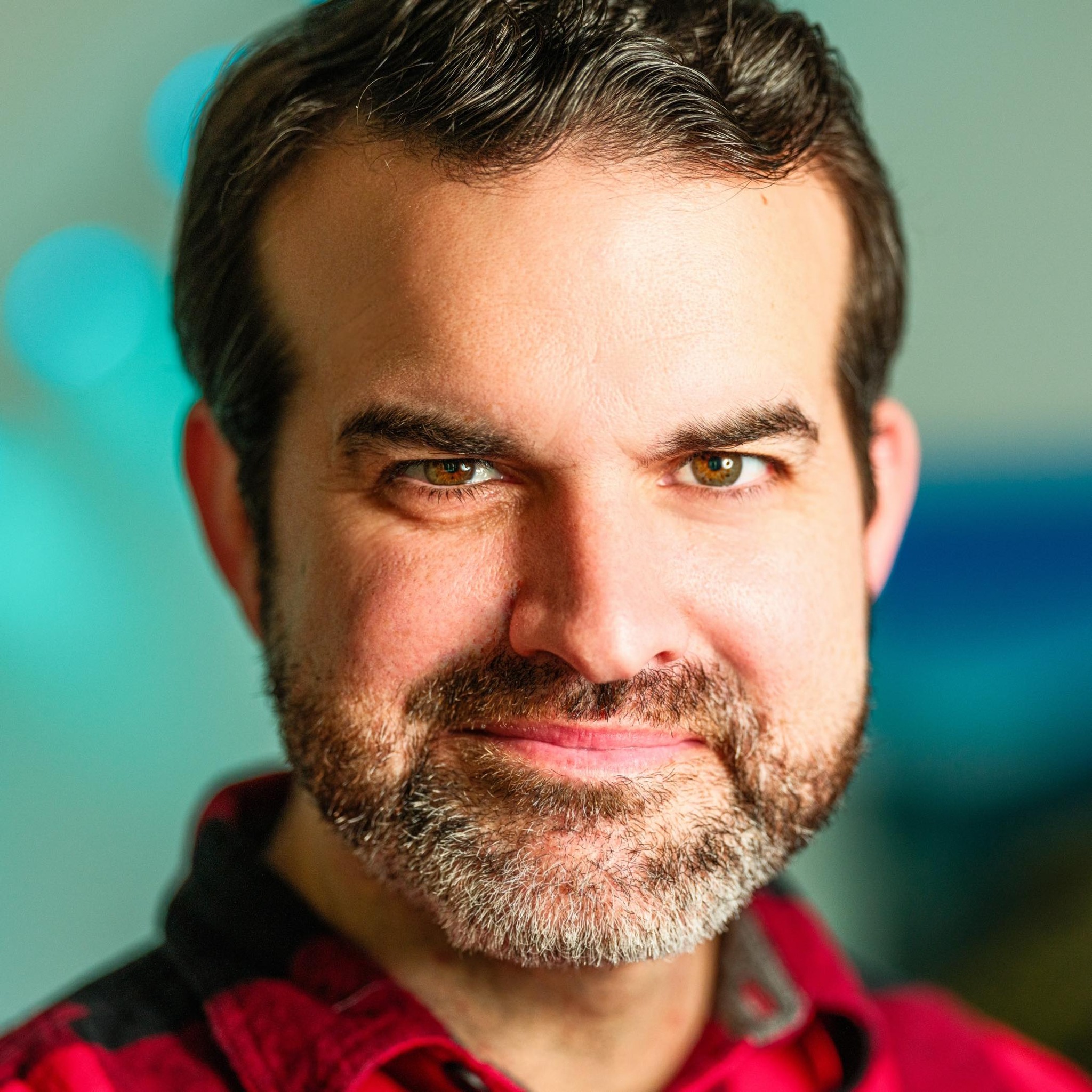
Wes ShinnWes Shinn is a visual storyteller, photojournalist, filmmaker, and minister whose life and calling have been forged in some of the most demanding arenas a creative can inhabit.