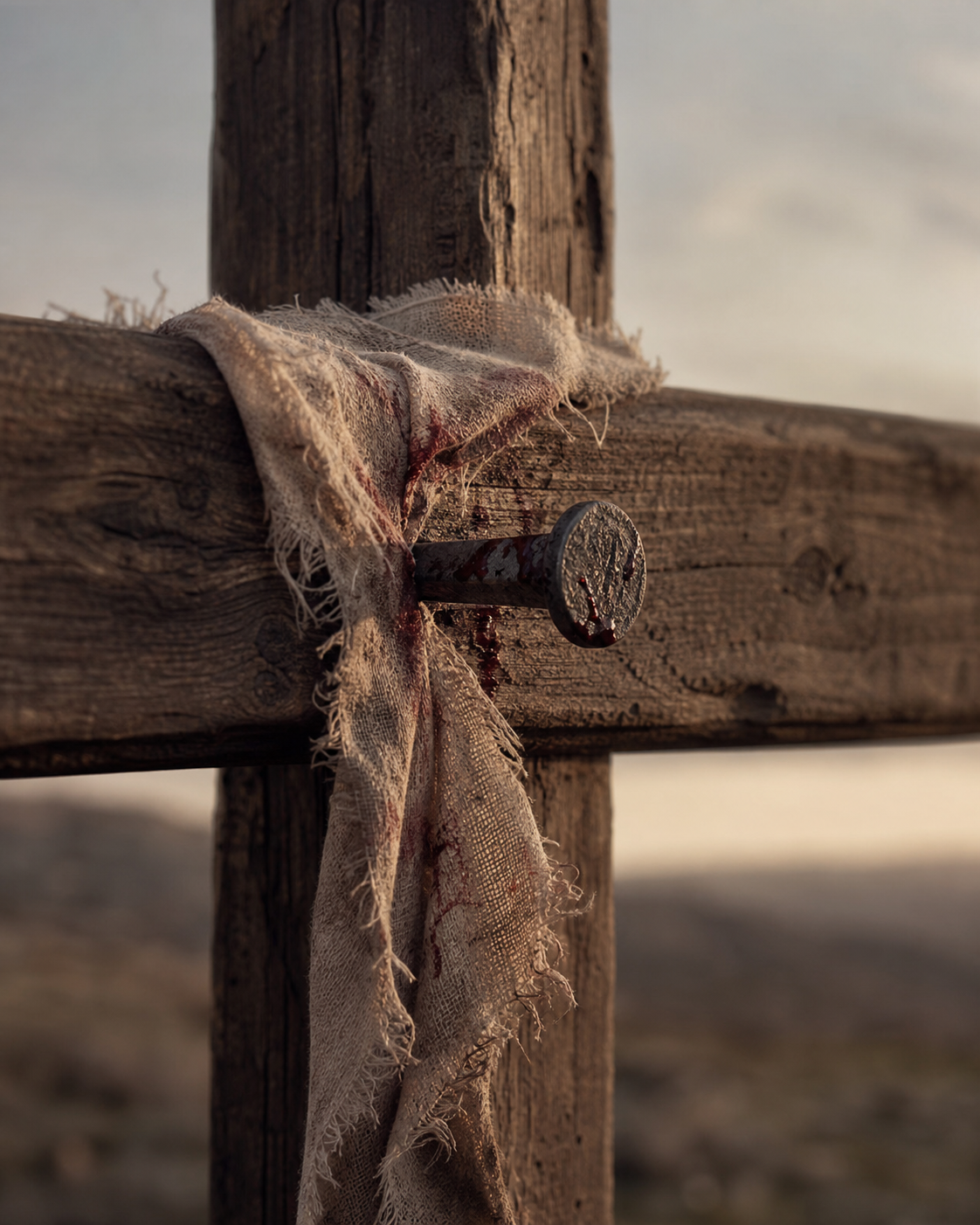
Sabbath Rest.


Genesis 2:2–3
"And on the seventh day God finished his work that he had done, and he rested on the seventh day from all his work that he had done. So God blessed the seventh day and made it holy, because on it God rested from all his work that he had done in creation."
Sabbath Rest.
And Its Purpose: Why the Son Can Stop When the Slave Cannot
We say it casually. I need a day off. I need to recharge. Self-care Sunday. We know which chicken restaurant is closed on the Lord’s Day, and we grumble about it in the drive-through line on Sunday afternoon.
Sabbath.
Somewhere between the blue laws of our grandparents and the always-on glow of the phone on our nightstand, we have lost something. We have reduced one of the Ten Commandments, the only one God grounded in His own example, into a lifestyle suggestion. A nap. A wellness tip. A thing we will get to when the inbox is finally empty.
It never is.
This is an invitation to stop. To actually look at what God built into the fabric of creation, carved into stone at Sinai, and fulfilled in the person of His Son. Not as a rule to keep, but as a window into who you are.
Because Sabbath was never mainly about the calendar. It was about identity.
Sabbath is not a day off from work. It is a weekly declaration of who you belong to.
THE SEVENTH DAY: Rest Before Rules
Before Sabbath was ever a commandment, it was something God did.
“And on the seventh day God finished his work that he had done, and he rested on the seventh day from all his work that he had done. So God blessed the seventh day and made it holy, because on it God rested from all his work that he had done in creation.” — Genesis 2:2–3
The Hebrew word translated “rested” is שָׁבַת (shavat). Its root meaning is not “relax” or “recover.” It means to cease. To stop. To bring to an end. God was not tired. The Almighty did not need a nap after making galaxies. He stopped because the work was complete, and He stepped back to delight in what He had made. It was very good, and He let it be.
That means the first Sabbath was not recovery. It was celebration.
Now notice the timeline. Adam was formed on the sixth day. Which means the very first full day of human existence was the seventh. Before Adam ever named an animal, tilled a row of soil, or tended a single tree in the garden, he rested with God in a world he had not built.
Humanity did not work its way into rest. We began there.
Key Insight — The order matters. God did not give Adam six days of labor and then reward him with rest. He gave him rest first, then work. The son begins in his Father’s finished work and works from that place. The slave works all week hoping to earn a break.
Adam’s first full day on earth was a day off. He began in rest before he ever lifted a tool.
THE BRICK PITS: What Rest Meant to a Slave
To understand why God commanded Sabbath at Sinai, you have to remember where Israel had just come from.
Egypt built with mud. Nile clay was mixed with chopped straw, pressed into wooden molds, turned out in rows, and baked under the sun. On the wall of the tomb of Rekhmire, a vizier of Thebes from roughly the fifteenth century BC, painters recorded the scene: foreign laborers hauling water, kneading mud, stacking bricks, while overseers stand by with rods in hand. It is the closest thing we have to a photograph of the world Israel was born into.
Every day was measured in output. Every person was a quota. And when Moses asked Pharaoh to let the people go and worship, Pharaoh answered by making the quota impossible:
“You shall no longer give the people straw to make bricks, as in the past; let them go and gather straw for themselves. But the number of bricks that they made in the past you shall impose on them, you shall by no means reduce it, for they are idle.” — Exodus 5:7–8
Idle. That was Pharaoh’s diagnosis of a people who wanted to stop and worship. He said it again a few verses later, twice for emphasis: “You are idle, you are idle” (Exodus 5:17). In Pharaoh’s economy, a person who stopped producing was worthless, and a person who wanted to worship was lazy.
Then God brought them out. And when Moses repeated the Sabbath command to the generation about to enter the Promised Land, he gave a reason you will not find in the Exodus version:
“You shall remember that you were a slave in the land of Egypt, and the LORD your God brought you out from there with a mighty hand and an outstretched arm. Therefore the LORD your God commanded you to keep the Sabbath day.” — Deuteronomy 5:15
Read that slowly. Therefore. The reason for Sabbath is that you are not a slave anymore. Slaves do not get a day off. Sons do. Every seventh day, Israel was to put down the tools and say with their whole bodies: Pharaoh does not own us. We belong to the LORD.
And the rest was not only for the free. God commanded it so “that your male servant and your female servant may rest as well as you” (Deuteronomy 5:14). The livestock rested. The foreigner rested. In a world where rest was a privilege of kings, God made it a weekly gift for everyone under His covering.
The charge never really went away, either. Centuries later, Roman writers looked at the Jewish Sabbath and saw the same thing Pharaoh saw. The philosopher Seneca complained that the Jews wasted a seventh of their lives in idleness, and the historian Tacitus attributed the custom to sloth. Empires have always despised people who stop.
Pharaoh’s word for rest was “idle.” God’s word for it was “holy.”
THE MANNA TEST: Rest Requires Trust
Before Israel ever reached Sinai, God gave them a training exercise in Sabbath. It came in the form of bread.
Every morning in the wilderness, manna covered the ground. The instruction was simple: gather enough for today. Do not store it. And some of them did not listen. They hoarded it overnight, and by morning it “bred worms and stank” (Exodus 16:20).
But on the sixth day, God told them to gather twice as much. And the manna they set aside for the Sabbath? “It did not stink, and there were no worms in it” (Exodus 16:24). Same bread. Same jar. Same overnight wait. The only difference was whether God was the one providing for tomorrow.
“See! The LORD has given you the Sabbath; therefore on the sixth day he gives you bread for two days. Remain each of you in his place; let no one go out of his place on the seventh day.” — Exodus 16:29
Some went out anyway. They found nothing (Exodus 16:27). Old habits from the brick pits die hard. When you have spent your whole life believing that if you do not produce, you will not survive, a day of rest feels like a threat.
That is the heart of it. Sabbath is not primarily a scheduling problem. It is a trust problem. To stop for a full day is to confess that six days of work under God’s blessing is enough, and that the world will keep turning without your hands on it.
“It is in vain that you rise up early and go late to rest, eating the bread of anxious toil; for he gives to his beloved sleep.” — Psalm 127:2
A Pastoral Note — If rest makes you anxious, that does not mean you are failing at Sabbath. It means Sabbath is doing its work. The discomfort you feel when you stop is the sound of an old taskmaster losing his grip.
The manna you gather in fear rots. The manna God provides for your rest keeps.
PHARAOH IN THE WEST: Why We Cannot Stop
We do not have overseers with rods anymore. We do not need them. We carry the quota in our own chests.
Ask a stranger at a party who they are, and they will tell you what they do. In much of the Western world, worth is measured by output, and exhaustion has become a status symbol. I’m slammed. I’m running on fumes. I haven’t had a real day off in months. We say it almost proudly, as if being tired proves we matter.
Our economy never closes. Stores, streaming, deliveries, and markets run around the clock, and they depend on us never fully stopping. Our work no longer stays at the office; it lives in our pockets and lights up on the nightstand. The shared rhythm that once made rest possible, a whole town slowing down together, is mostly gone. Now rest is a private choice made against the current, and whoever stops feels like they are falling behind everyone who did not.
Even when we do rest, we usually call it “recharging.” Think about that word. A battery is recharged so it can be drained again. We have made rest a servant of productivity, a pit stop on the way back to the brick pile. That is not Sabbath. That is Pharaoh with a wellness plan.
And the church has not always helped. Some of us grew up with Sabbath as a list of things you could not do, and we threw it out the moment we were old enough. Others were taught it was Old Testament law that no longer applies, and the practice disappeared along with the legalism. Meanwhile, ministry culture too often celebrates burnout as faithfulness.
But beneath all of it is something older than any economy. Jesus told a story about it.
In the parable of the prodigal son, the younger brother comes home rehearsing a speech: “I am no longer worthy to be called your son. Treat me as one of your hired servants” (Luke 15:19). He is willing to come back as an employee. He cannot imagine coming back as a son.
The older brother never left home, and he is no different. When the party starts, he stands outside and says, “Look, these many years I have served you” (Luke 15:29). He lived in the father’s house for years and thought of himself as a worker the entire time.
That is the Western church in one sentence. Living in the Father’s house. Working like a hired hand.
“Son, you are always with me, and all that is mine is yours.” — Luke 15:31
An orphan has to provide for himself, because no one else will. Every hour unworked is an hour of exposure. That is why the orphan spirit cannot rest; it is not wired for it. A son rests because his Father is still at work.
Free on paper. Still making bricks.
THE LORD OF THE SABBATH: Rest Has a Name
By the time Jesus arrived, Israel’s religious leaders had turned God’s gift into a new kind of quota. They built fences of rules around the Sabbath, debating how many steps you could walk and whether healing counted as work. Rest had become one more thing to perform.
Jesus walked straight through those fences. He healed on the Sabbath deliberately, publicly, and repeatedly. And when He was challenged, He named the purpose that had been lost:
“The Sabbath was made for man, not man for the Sabbath. So the Son of Man is lord even of the Sabbath.” — Mark 2:27–28
Sabbath was never meant to be a burden placed on people. It was a gift built for them. And then Jesus did something only God could do. He did not just explain the rest. He offered Himself as the rest:
“Come to me, all who labor and are heavy laden, and I will give you rest. Take my yoke upon you, and learn from me, for I am gentle and lowly in heart, and you will find rest for your souls.” — Matthew 11:28–29
When He was confronted for healing a man on the Sabbath in Jerusalem, His answer revealed the secret of His own unhurried life: “My Father is working until now, and I am working” (John 5:17). And a moment later: “The Son can do nothing of his own accord, but only what he sees the Father doing” (John 5:19). Jesus never once worked to earn the Father’s approval. He worked from it. He heard “This is my beloved Son” at the Jordan before He had performed a single miracle.
Then came the cross. On a Friday afternoon, Jesus cried out, “It is finished” (John 19:30). The work of redemption was complete, just as the work of creation had been complete on the sixth day. And what happened next? His body was laid in the tomb, and Luke records that the women who loved Him “rested according to the commandment” (Luke 23:56).
The first Sabbath followed a finished creation. The greatest Sabbath in history followed a finished cross. And on the first day of a new week, He rose.
This is why the writer of Hebrews can say:
“So then, there remains a Sabbath rest for the people of God, for whoever has entered God’s rest has also rested from his works as God did from his.” — Hebrews 4:9–10
Throughout Hebrews 3 and 4, the writer uses the ordinary Greek word for rest, κατάπαυσις (katapausis). But in verse 9 he reaches for a different word: σαββατισμός (sabbatismos), a Sabbath-keeping, a Sabbath-celebration. It appears nowhere else in the New Testament. It is as if the writer ran out of ordinary vocabulary. This is not just a break from labor. It is the full, festal rest of God Himself, opened to His children.
And then, in the very next verse, the great paradox: “Let us therefore strive to enter that rest” (Hebrews 4:11). The only labor left for the child of God is the labor of trusting that the work is finished.
Plain Language — Faithful Christians differ on how the Sabbath command applies today. Paul calls the Sabbath “a shadow of the things to come, but the substance belongs to Christ” (Colossians 2:17), and he lets believers hold different convictions about days (Romans 14:5–6). Some keep the Lord’s Day as a Christian Sabbath; some keep Saturday; many see the command fulfilled in Christ while still honoring a weekly rhythm of rest and worship. Wherever you land, the substance is the same: rest is found in a Person before it is found on a calendar.
The orphan works for rest. The son works from it.
THE PURPOSE: What Sabbath Is For
So why does Sabbath matter if Christ is our rest? Because the shadow still points to the substance, and because God still made your body, your mind, and your soul for a rhythm. Scripture gives Sabbath at least five purposes, and every one of them is about identity.
→ It remembers who made you. Sabbath echoes Genesis 2. You are a creature, not the Creator. The world was finished before you arrived, and it will keep spinning if you stop.
→ It remembers who freed you. Sabbath echoes Deuteronomy 5. You are not owned by Pharaoh, by your employer, by your inbox, or by your fear. The Lord brought you out.
→ It trains you to trust. Sabbath echoes the manna. One day in seven, you practice believing that your Father’s provision is enough.
→ It sets you apart. God called the Sabbath a sign “that you may know that I, the LORD, sanctify you” (Exodus 31:13). In a culture that cannot stop, a person who rests is a living testimony.
→ It previews forever. Sabbath is a weekly rehearsal for the rest that remains for the people of God (Hebrews 4:9). Every honest day of rest is a small taste of home.
Isaiah captured the posture God is after. Not grim rule-keeping, but delight:
“If you turn back your foot from the Sabbath, from doing your pleasure on my holy day, and call the Sabbath a delight and the holy day of the LORD honorable; if you honor it, not going your own ways, or seeking your own pleasure, or talking idly; then you shall take delight in the LORD.” — Isaiah 58:13–14
Sabbath is not a reward for finishing your work. It is a reminder that His work is finished.
PRACTICING SABBATH: Learning to Stop Like a Son
Sabbath is learned the way any family rhythm is learned: by practicing it, imperfectly, until it feels like home. Start here.
→ Pick a day and protect it. Choose a regular twenty-four hours and treat it as an appointment with your Father, not a leftover. If it is not on the calendar, Pharaoh will fill it.
→ Stop what you produce. Shavat means to cease. Put down the work that pays you, grades you, or measures you. Close the laptop. Silence the notifications. Let the bricks sit.
→ Prepare on the sixth day. Like the double portion of manna, do the shopping, the meal prep, and the urgent tasks the day before, so the Sabbath is free (Exodus 16:29).
→ Delight, don’t just recover. Fill the day with what draws you toward God and the people you love: worship, a long meal, a walk outside, unhurried prayer, play with your kids. Ask, “What would I do if I truly believed I was loved apart from my output?”
→ Rest together. Sabbath was communal from the start. Invite your family, your small group, or a friend into it. It is far easier to stop when you are not the only one stopping.
→ Notice the taskmaster. When guilt, anxiety, or the urge to “just check one thing” rises, name it. Ask, “Who is telling me I am idle?” Then answer with the truth: “You are no longer a slave, but a son” (Galatians 4:7).
A Pastoral Note — If you are a nurse working weekends, a first responder on rotating shifts, a pastor whose Sunday is the heaviest day of the week, or a parent of small children for whom no day is truly empty, hear this: Sabbath was made for you, not you for the Sabbath. Find the day and the shape that your season allows. Jesus once told His exhausted disciples, “Come away by yourselves to a desolate place and rest a while” (Mark 6:31). He meets you in the rest you can take, not the rest you wish you had.
The orphan spirit strives. The adopted son rests.
GUIDED REFLECTION: Sitting With the Father
Take these slowly. Write your answers if you can. Let the questions do their work before you try to fix anything.
→ Where do I measure my worth by output? What would I feel if I produced nothing for a full day?
→ What is my version of “you are idle”? Whose voice do I hear when I try to rest, and does it sound more like Pharaoh or like my Father?
→ Where am I hoarding manna? What am I working, saving, or striving for out of fear that God will not provide tomorrow?
→ Am I more like the younger brother or the older one? Do I come to God hoping to be a hired servant, or do I live in His house and still think of myself as an employee?
→ What would delight look like? If I set aside one day this week to rest as a son or daughter, what would I stop, and what would I enjoy?
THE INVITATION: Come Home and Stop
You were not made for the brick pits. You were made in a garden, on the eve of a seventh day, to begin your life resting with God in a world you did not build.
Pharaoh will always call it idleness. Your phone will always have one more thing. The culture will always reward the person who never stops. But your Father has already said the final word over your worth, and He said it before you ever lifted a tool.
The work is finished. The bread is provided. The door of the house is open.
You are not a hired hand. You are a son. You are a daughter.
So stop.
Not because you have earned it. Because He has.
A Closing Prayer
Father,
You finished Your work and rested, and You invited me into that rest before I ever did a thing.
I confess that I still live like a slave in Egypt. I count my bricks. I hoard my manna. I hear Pharaoh call me idle, and I believe him.
Thank You for bringing me out with a mighty hand and an outstretched arm. Thank You that Jesus said “It is finished,” and meant it.
Teach me to stop. Teach me to trust Your provision on the sixth day and Your presence on the seventh. Silence the taskmaster in my chest. Let me come home not as a hired servant, but as Your child.
Lead me beside still waters. Make me lie down. And when I rest, let me rest in You.
Abba. Father. Amen.
SCRIPTURE REFERENCE INDEX
All Scripture quotations are from the ESV® Bible (The Holy Bible, English Standard Version®), copyright © 2001 by Crossway, a publishing ministry of Good News Publishers. Used by permission. All rights reserved.
Creation and the First Sabbath
Genesis 2:2–3 — God finishes creation, rests on the seventh day, and blesses it as holy.
Slavery, Exodus, and the Sabbath Command
Exodus 5:7–8 — Pharaoh withholds straw but keeps the brick quota, calling Israel idle.
Exodus 5:17 — Pharaoh repeats the charge: “You are idle, you are idle.”
Exodus 16:20, 24, 27, 29 — Hoarded manna rots, Sabbath manna keeps, and God gives bread for two days.
Exodus 31:13 — The Sabbath is a sign that the LORD sanctifies His people.
Deuteronomy 5:14–15 — Sabbath rest extends to servants and is grounded in deliverance from slavery.
Wisdom and the Prophets
Psalm 23:2 — The Shepherd makes His sheep lie down beside still waters.
Psalm 127:2 — Anxious toil is in vain; God gives His beloved sleep.
Isaiah 58:13–14 — Calling the Sabbath a delight leads to delight in the LORD.
Jesus and the Sabbath
Matthew 11:28–29 — Jesus invites the weary to come to Him for rest.
Mark 2:27–28 — The Sabbath was made for man; the Son of Man is its Lord.
Mark 6:31 — Jesus calls His exhausted disciples away to rest.
Luke 15:19, 29, 31 — The prodigal asks to be a hired servant; the older brother says he has served; the father answers, “Son.”
Luke 23:56 — The women rest on the Sabbath while Jesus lies in the tomb.
John 5:17, 19 — Jesus works because the Father works; the Son does only what He sees the Father doing.
John 19:30 — Jesus declares, “It is finished.”
The Rest That Remains
Romans 8:15 — Believers receive the Spirit of adoption, not slavery, and cry “Abba! Father!”
Romans 14:5–6 — Believers may hold different convictions about days.
Galatians 4:7 — You are no longer a slave, but a son and an heir.
Colossians 2:16–17 — The Sabbath is a shadow; the substance belongs to Christ.
Hebrews 4:9–11 — A Sabbath rest remains for God’s people; strive to enter it.
ADDITIONAL RESOURCES
The following works are commended for further study on Sabbath, rest, and the Father’s heart:
Classic and Foundational Works
Heschel, Abraham Joshua — The Sabbath (Farrar, Straus and Giroux, 1951). A beloved Jewish meditation on Sabbath as holiness in time rather than space.
Dawn, Marva J. — Keeping the Sabbath Wholly (Eerdmans, 1989). A Christian guide to ceasing, resting, embracing, and feasting.
Contemporary Works
Brueggemann, Walter — Sabbath as Resistance (Westminster John Knox, 2014). Reads the Sabbath command against the backdrop of Pharaoh’s economy of endless production.
Comer, John Mark — The Ruthless Elimination of Hurry (WaterBrook, 2019). A practical, accessible call to recover Sabbath and slowness in a distracted age.
Scazzero, Peter — Emotionally Healthy Spirituality (Zondervan, 2006). Includes a pastor’s honest treatment of Sabbath as a discipline for the soul.
On Sonship
Nouwen, Henri J. M. — The Return of the Prodigal Son (Doubleday, 1992). A meditation on both brothers that exposes the servant mindset in all of us.
Written by
Wes ShinnWes Shinn is a visual storyteller, photojournalist, filmmaker, and minister whose life and calling have been forged in some of the most demanding arenas a creative can inhabit.