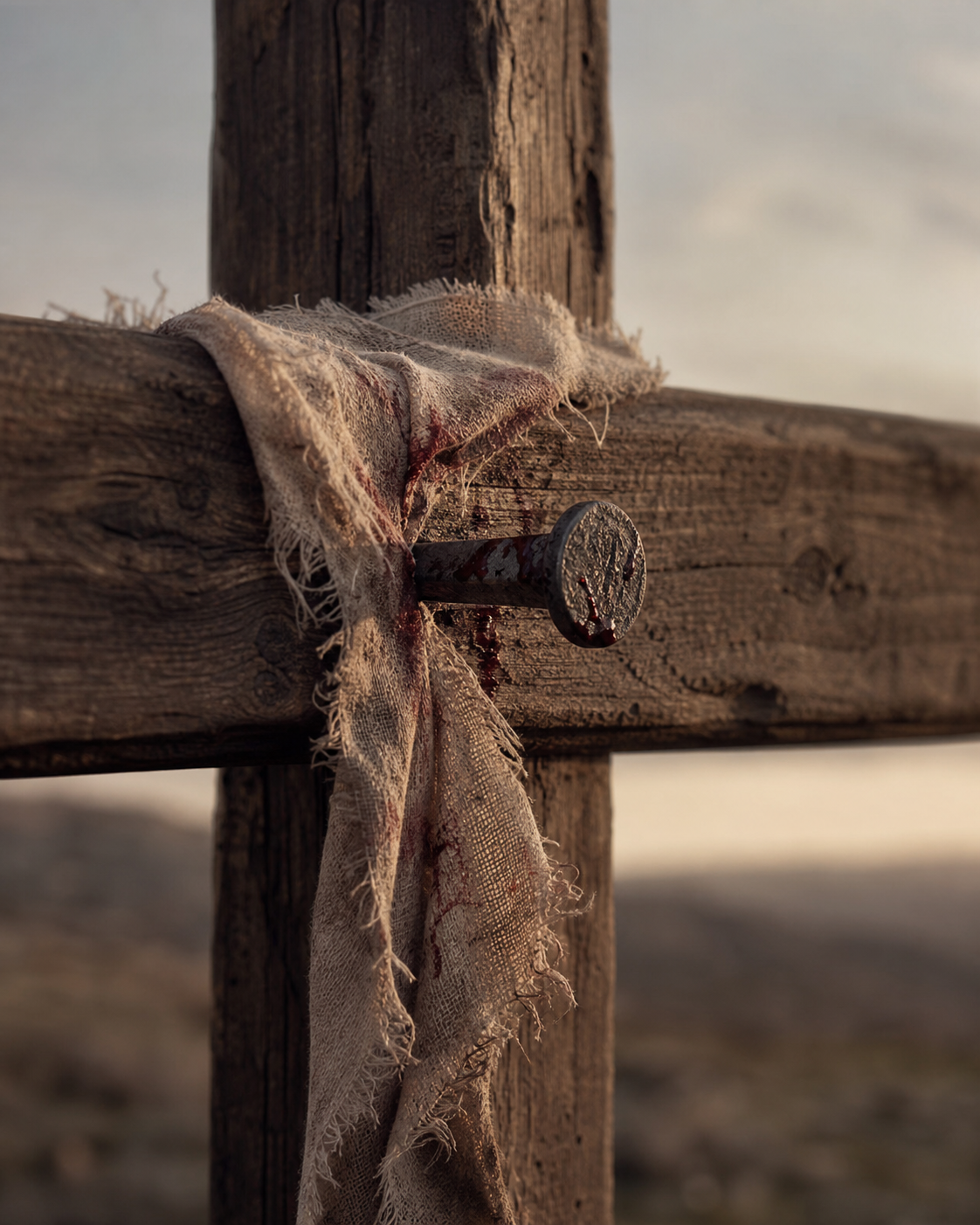
The Father Who Made the First Move


Romans 8:15
"For you did not receive the spirit of slavery to fall back into fear, but you have received the Spirit of adoption as sons, by whom we cry, ‘Abba! Father!’"
The Abrahamic Covenant and the Heart of God
A Devotional from The Adopted Son
Setting the Scene: The World Abram Came From
Before we can understand what God did when He called Abram, we have to understand the world He called him out of. Because the more you know about where Abram came from — his city, his culture, his family, his gods — the more staggering the choice becomes.
And the more clearly you see yourself in it.
The City: Ur of the Chaldeans
Abram was born and raised in Ur of the Chaldeans — one of the most sophisticated, powerful, and religiously saturated cities in the ancient world. Ur was not a backwater. It was a crown jewel of Mesopotamian civilization, located in what is now southern Iraq, along the Euphrates River. At its peak, Ur was home to an estimated 65,000 people — a metropolis by ancient standards.
Archaeologists have uncovered the ruins of Ur, and what they found is remarkable. Ur had advanced infrastructure: multi-story homes with indoor plumbing, a thriving merchant class, sophisticated legal codes, schools teaching mathematics and writing, and trade networks stretching from the Persian Gulf to the Mediterranean. This was not a primitive culture scratching in the dirt. It was a world-class civilization at the height of its power.
At the center of the city stood the Great Ziggurat of Ur — a massive stepped temple tower that dominated the skyline and served as the earthly dwelling place of Nanna, the moon god, the chief deity of the city. The ziggurat was not just a religious symbol. It was the beating heart of the entire social, economic, and political order. The priests controlled the granaries. The temple dictated the calendar. The gods of Ur — Nanna above all — were woven into every dimension of public and private life.
If you lived in Ur, you did not choose your religion the way we choose a church. You were born into it, shaped by it, defined by it. The gods of Ur were the air everyone breathed.
Abram didn’t come from a spiritual vacuum. He came from a world drowning in the wrong gods.
The Family: A House Full of Idols
It would be one thing if Abram were simply a citizen of an idolatrous city who privately sought something more. But the text of Scripture does not give us that comfort. Joshua 24:2 is direct and unsettling:
“Thus says the LORD, the God of Israel, ‘Long ago, your fathers lived beyond the Euphrates, Terah, the father of Abraham and of Nahor, and they served other gods.’”
— Joshua 24:2
Terah — Abram’s father — served other gods. This was not a family on the edge of faith, searching for the true God. This was a household embedded in the idol worship of Ur. Ancient Jewish tradition, reflected in sources like the book of Jubilees and the writings of Josephus, holds that Terah was not just a worshiper of idols but an idol maker — a craftsman who carved and sold the very images his city bowed before.
If this tradition is accurate, Abram grew up in a home that was literally the manufacturing center of false worship. The smell of cut wood and fresh paint. The finished faces of gods that could not see, could not speak, could not save. And a father who made his living by the whole system.
Abram’s family tree, on his father’s side, reads like a monument to everything God was against. And yet Genesis 11 traces his lineage back further still — through Shem, the son of Noah, all the way to Adam. The bloodline was ancient. The covenant memory was buried deep. But it was buried.
There is no record in Scripture of Abram seeking God. No record of him crying out from the midst of the idol shop. No record of him being dissatisfied with Nanna or Enlil or any of the gods of Ur. He was simply there — living inside the world his family had built, breathing the air his culture provided, carrying a name that pointed toward a greatness he had not yet discovered.
God didn’t call a man who was looking for Him. He called a man who didn’t know he needed to be found.
The Culture: A World of Many Gods and Zero Grace
To understand the weight of what God was about to do, you have to understand the theological atmosphere of the ancient Near East. It was not a world without religion. It was a world drowning in it. The Mesopotamian religious system was vast and complex — a pantheon of hundreds of deities, each governing different domains of life: weather, fertility, war, death, wisdom, the moon, the sun, the rivers.
But here is the critical thing: in this world, the gods did not love you. They used you.
The Mesopotamian creation myth — the Enuma Elish — tells the story of human beings created from the blood of a slain god, formed not out of love but out of necessity: to serve the gods, to feed them through sacrifice, to do the labor the divine beings no longer wished to do. Humanity in this framework was not a beloved creation. It was a workforce. A means to an end.
The relationship between humans and gods in ancient Mesopotamia was transactional at best and adversarial at worst. You made your offerings. You performed your rituals. You hoped the gods were appeased. You feared that they were not. There was no covenant. There was no promise. There was no love. There was only performance, appeasement, and the ever-present anxiety that one wrong move might unleash divine wrath.
This is the world Abram knew. This is the theological air he breathed. This is the only framework for the divine that he had ever been given.
Into that world — without warning, without preamble, without Abram doing a single thing to deserve it — a God he did not know spoke his name.
Every god Abram had ever heard of demanded performance. This one offered a promise.
The Journey That Had Already Begun: Terah’s Unfinished Move
There is one more detail in the Genesis narrative that almost everyone overlooks. Genesis 11:31–32 tells us something surprising:
“Terah took Abram his son and Lot the son of Haran, his grandson, and Sarai his daughter-in-law, his son Abram’s wife, and they went forth together from Ur of the Chaldeans to go into the land of Canaan, but when they came to Haran, they settled there. The days of Terah were 205 years, and Terah died in Haran.”
— Genesis 11:31–32
Terah — the idol-worshiping patriarch — had already started the journey toward Canaan. He left Ur. He took his family. He was headed in the right direction. And then he stopped in Haran, settled, and never completed the journey. He died there.
We are not told why Terah stopped. Scripture doesn’t say. But the pattern is familiar: a movement toward the promise, interrupted. An almost. A close-but-not-there. A man who got partway to the destination and made a home out of the stopping point.
And then, in Genesis 12:1, God speaks to Abram — in Haran, in the place his father stopped — and says: Finish the journey.
The destination Terah could not reach, Abram would reach. The promise Terah’s family carried in their blood without knowing it, Abram would receive in full. The unfinished journey of one generation became the launched destiny of the next.
What your father could not finish, God is calling you to complete. The journey doesn’t die with the generation that stopped.
Why Abram? The Answer That Shatters Every Human Logic
So now the question lands with full force: Why him?
Why Abram? Why this man, from this city, from this family, steeped in idol worship, carrying no credentials of faith, living in the stopping place of an unfinished journey? Why not a priest of a purer tradition? Why not a man already seeking the one true God? Why not someone whose heritage pointed the right direction?
The answer Scripture gives is both simple and devastating to human pride:
There is no answer.
The text offers no explanation. No record of Abram’s virtue. No reason given for the selection. Deuteronomy 7:6–8 says that God did not choose Israel because they were greater or more numerous than other peoples — in fact, they were the smallest. He chose them because He loved them, and because He was keeping the oath He swore to their fathers. The reason was not in the people. The reason was in God.
“For you are a people holy to the LORD your God. The LORD your God has chosen you to be a people for his treasured possession, out of all the peoples who are on the face of the earth. It was not because you were more in number than any other people that the LORD set his love on you and chose you, for you were the fewest of all peoples, but it is because the LORD loves you and is keeping the oath that he swore to your fathers…”
— Deuteronomy 7:6–8
The selection of Abram is the first and clearest proof of a truth that runs through the entire Bible and reaches its fullest expression at the cross: God’s grace does not flow toward the deserving. It flows toward the chosen. And the choosing is rooted not in the worthiness of the recipient but in the character of the One who chooses.
God chose Abram because God is the kind of God who chooses. He pursues because He is a pursuer by nature. He calls because He is a Father gathering a family. He promises because He is a covenant-keeper who cannot lie.
Abram brought nothing to the table. And that is precisely the point.
Because if Abram had been chosen for his virtue, then only virtuous people would have hope. If he had been chosen for his heritage, then only people from the right family would qualify. If he had been chosen for his seeking, then only the religiously inclined would have a chance. But Abram was chosen from the idol shop. From the wrong family. From the stopping place. From the middle of a culture that had never heard the name of the God who was now speaking to him.
Which means the door is open. Wider than you thought. For longer than you imagined. For people further from the kingdom than you assumed.
For you.
If God could call a man out of an idol shop in Ur, He can call anyone from anywhere at any time. Including you. Including now.
What This Means for You
The cultural background of Abram is not ancient trivia. It is a mirror.
Because most of us did not come from perfect spiritual heritage either. Most of us have fathers who stopped somewhere short of the promise. Most of us grew up breathing air that was not entirely clean — shaped by cultures, families, and frameworks that pointed us toward lesser things. Most of us have bowed at the altar of something that couldn’t save us before we ever heard the voice that could.
And the God who called Abram out of Ur is the same God who called you out of wherever you were.
He did not wait for your family to get it right before He moved toward you. He did not wait for your cultural environment to become more favorable. He did not wait for you to clean up your theological heritage or sort out the spiritual mess your ancestors left behind.
He spoke. Into the middle of your Ur. Into the middle of your Haran. Into the middle of whatever stopping place you had made a home out of.
And He said what He said to Abram: Go. I will show you. I will make you. I will bless you. I will be your God.
“…God, who gives life to the dead and calls into existence the things that do not exist.”
— Romans 4:17
He calls into existence what does not yet exist. He speaks destiny into barrenness. He calls greatness out of idol shops. He finishes journeys that previous generations abandoned. He reaches into the most unlikely family lines, the most spiritually cluttered histories, the most religiously confused backgrounds — and He speaks a name into a future that no one could have predicted.
That is who He is. That is what He does. That is the God of the Abrahamic covenant.
And He has not changed.
He doesn’t call the qualified. He qualifies the called. And He called you.
Before We Begin: This Was Always a Father Story
Most people read the Abrahamic covenant as a real estate transaction. Land. Offspring. National destiny. Ancient history.
But if you read it through the lens of Romans 8 — through the Spirit of adoption, through the cry of Abba — something else entirely comes into focus.
This was never primarily about land or lineage. It was about a Father looking for sons and daughters.
Everything God did with Abraham — the call, the promises, the covenant ceremony, the renaming, the near-sacrifice on Moriah — was God revealing something about His own heart. A heart that initiates. A heart that pursues. A heart that binds itself in love. A heart that, in the end, would not spare His own Son so that you could be called His.
The Abrahamic covenant is not background material for understanding Israel. It is the first chapter of your adoption story.
And underneath every act of God in this story — every name He speaks, every promise He makes, every oath He swears — is a Father showing you who He is. Not as a theological proposition. As a person. As your person.
The question this devotional wants to answer is not just what God did for Abraham. It is why — and what that why reveals about the kind of Father He is to you, and what it means to actually live as a child of that Father.
God didn’t write the Abrahamic covenant to explain Israel. He wrote it to explain Himself.
Part One: Fathers Speak First
Genesis 12:1 — The Initiative of the Father
A note on names: God calls this man Abram in Genesis 12 and 15. His name does not change to Abraham until Genesis 17, when God renames him as part of the covenant’s deepening. Abram means exalted father. Abraham means father of a multitude. The name change itself is one of the most theologically loaded moments in the entire story — and we will trace it carefully when we get there.
“Now the LORD said to Abram, ‘Go from your country and your kindred and your father’s house to the land that I will show you.’”
— Genesis 12:1
The first word God ever speaks to Abram is not a requirement. It’s not a test. It’s not a list of qualifications to meet before relationship is possible.
It’s a call.
Go. Present tense. Personal. Direct. Before Abram has done a single thing to deserve it, the voice of God cuts through whatever ordinary morning this was in the city of Ur — and speaks his name into a new future.
This is what fathers do. They speak first.
You didn’t find God. God found you — before you even knew you were lost.
A slave waits to see if the master is in a good mood before approaching. A hired hand calculates what he has to offer before making his case. But a father — a good father — moves toward his children. He doesn’t wait for them to earn their way to the table. He sets the table and calls them home.
This is the character of God that the Abrahamic covenant begins to unveil. He is not a distant deity managing cosmic systems from a safe remove. He is a Father who leans out of heaven and speaks into the life of one wandering, idol-adjacent man in ancient Mesopotamia — and says, simply: Come.
“For those whom he foreknew he also predestined to be conformed to the image of his Son, in order that he might be the firstborn among many brothers.”
— Romans 8:29
Many brothers. Jesus — the eternal Son — as the firstborn of a family. This was always the goal. Not just a nation. Not just a religious system. A family. Sons and daughters bearing the image of the Son. The call to Abram was the beginning of the Father gathering His family.
“We love because he first loved us.”
— 1 John 4:19
The grammar of love in the kingdom always moves in one direction first: from the Father outward. He loved before we loved. He called before we answered. He moved before we knew to move.
The first move was His. The ten-thousandth move is still His.
What this reveals about the heart of the Father: He is not a God who waits at a distance to see if you will be worthy enough to approach. He is a Father who crosses the distance Himself — proactive, relentless, and personal in His pursuit. The first move was His. The ten-thousandth move is still His.
Plain language: You did not find God. God found you — the same way He found Abram: before you had anything to offer, before your life made sense, before you even knew you were lost. The first move was always His. It always will be.
Part Two: What a Father Promises His Children
Genesis 12:2–3, 15:5, 17:5–8 — The Three Gifts
When God made His covenant with Abraham, He gave him three interlocking promises: land, seed, and blessing. Read them not as political decrees but as a Father speaking over His child, and they sound entirely different.
The Land — “I am giving you a place to belong.”
“To your offspring I will give this land.”
— Genesis 12:7
One of the deepest hungers in every human being is the hunger for belonging — for a place that is yours, a home that cannot be taken, a ground you are allowed to stand on without apology.
Orphan hearts are marked by homelessness. Not always physical homelessness — but the inner sense that you are always a guest, never quite belonging, always one mistake away from being asked to leave.
You are not a guest in the Father’s house. You are the reason He built it.
The Father’s first promise was land. I am giving you somewhere to belong. A good father doesn’t leave his children rootless. He builds something, plants something, establishes something — so his children have ground beneath their feet.
“In my Father’s house are many rooms. If it were not so, would I have told you that I go to prepare a place for you?”
— John 14:2
What this reveals about the heart of the Father: He is not a God who leaves His children wandering. He is a builder, a planter, an establisher of home. The land promise is the Father’s answer to the orphan wound. It says: You are not a guest here. You are family. This place was made with you in mind.
Plain language: The orphan spirit tells you that you don’t really belong — not in your family, not in the church, not in the Father’s presence. The Abrahamic covenant is one of the earliest places in Scripture where the Father directly contradicts that lie. You have a place. He built it for you. You are allowed to be here.
The Seed — “I am making you fruitful.”
“And He brought him outside and said, ‘Look toward heaven, and number the stars, if you are able to number them.’ Then He said to him, ‘So shall your offspring be.’”
— Genesis 15:5
Abraham was old. Sarah was barren. The human math said: No descendants. No legacy. No future.
The Father’s math said: Look at the stars.
The Father doesn’t see your barrenness. He sees your harvest.
This is what a good father does — he sees the fruitfulness in you that your circumstances have not yet produced. He calls it out before it exists. He speaks over barrenness with a vocabulary of abundance. Your Father looks at you and says: Stars. That is what is in you. That is what is coming.
“And if you are Christ’s, then you are Abraham’s offspring, heirs according to promise.”
— Galatians 3:29
What this reveals about the heart of the Father: He sees what is not yet visible. He speaks to potential before it has produced anything. The barrenness that discourages you is not a verdict to Him. It is a canvas. And He is already painting on it.
Plain language: The Father doesn’t look at your delays and see failure. He looks at you and sees what He planted — before the fruit has appeared. That is not false comfort. That is a Father speaking covenant reality over a child who doesn’t yet see what He sees.
The Blessing — “I am sending you to bless others.”
“...and in you all the families of the earth shall be blessed.”
— Genesis 12:3
The blessing was never meant to stop with Abraham. It was meant to move through him — outward, to the nations, to all the families of the earth. This is the Father’s design for sonship: sons and daughters so secure in their identity, so rooted in belonging — that the blessing overflows. Orphans hoard. Sons and daughters give.
You were not saved to survive. You were adopted into a family with a mission.
“Blessed be the God and Father of our Lord Jesus Christ, who has blessed us in Christ with every spiritual blessing in the heavenly places.”
— Ephesians 1:3
What this reveals about the heart of the Father: He is a Father who blesses lavishly and then trusts His children to carry it. He gives everything in Christ and commissions His children to be conduits of that same generosity. The Father’s heart is always moving outward — toward the nations, toward the ones who haven’t yet heard that they have a Father looking for them too.
Plain language: You were not saved to survive. You were adopted into a family with a mission. The Father’s blessing doesn’t pool in your life like a reservoir you guard. It flows through you like a river.
Part Three: What the Character of God Reveals About the Heart of the Father
The Seven Faces of the Father’s Heart
Before we move deeper into the covenant events, we need to stop and let the full portrait of the Father come into focus. Every act God performs in this story is a window into who He is — not as an abstract theological category, but as a Father whose heart is oriented toward His children in specific, consistent, traceable ways.
Theology tells you what God knows. The covenant tells you how He feels about you.
1. He Is Initiating — The Father Who Moves First
“Now the LORD said to Abram…”
— Genesis 12:1
Before Abram prays, God speaks. In every other religious system of the ancient world, the human being was responsible for reaching toward the divine. The God of the Abrahamic covenant reverses that entirely. He speaks into silence. He calls into darkness. He moves toward the undeserving before the undeserving have done a single thing to invite Him.
“You did not choose me, but I chose you and appointed you that you should go and bear fruit…”
— John 15:16
2. He Is Unconditional — The Father Who Doesn’t Require Perfection to Love
Abram came from a family of idol worshippers (Joshua 24:2). No covenant history. No resume of faithfulness. And yet God chose him — not after a probationary period, not contingent on future performance, but at the beginning. When God walked through the pieces alone in Genesis 15, He made the covenant unilateral. Abraham was asleep. The Father bore both sides of the oath — saying in effect: My love for you does not depend on what you do with it.
“…God shows his love for us in that while we were still sinners, Christ died for us.”
— Romans 5:8
While. Not after. Not once we were ready. While. The Father’s heart does not fluctuate with your consistency. His love is the one unchanging variable in a universe of changing things.
His love for you is not a response to your behavior. It is a commitment rooted in His character.
3. He Is a Promise-Keeper — The Father Whose Word Holds
“God is not man, that he should lie, or a son of man, that he should change his mind. Has he said, and will he not do it?”
— Numbers 23:19
God made specific promises to Abraham and then kept them against every natural obstacle. Barrenness. Age. Human failure. The passage of time. Every circumstance screamed that the promises were impossible. He kept them anyway — not because Abraham was always faithful, but because the Father had spoken. The delay is not a denial. The silence is not abandonment. He who promised is faithful (Hebrews 10:23).
The delay is not a denial. The silence is not abandonment. What He spoke, He will do.
4. He Is Patient — The Father Who Waits Without Growing Cold
Abraham waited twenty-five years between the promise in Genesis 12 and the birth of Isaac in Genesis 21. In that span he tried to manufacture the promise himself (Ishmael), lied about his wife twice, and laughed at God’s timeline. And God never withdrew the promise. Not once. His patience is not passive resignation — it is active and purposeful. He is shaping something in the waiting that cannot be shaped any other way.
The waiting you are in right now is not wasted time. It is workshop time.
“The Lord is not slow to fulfill his promise as some count slowness, but is patient toward you…”
— 2 Peter 3:9
5. He Is Sacrificial — The Father Who Pays the Cost Himself
“…a smoking fire pot and a flaming torch passed between these pieces.”
— Genesis 15:17
When God walked through the pieces alone in Genesis 15, He was making a declaration: I will pay whatever this costs — including the cost of your failure. And then, millennia later, He did. The Father is not a God who watches from a safe distance. He enters the mess. He pays the price. He does not ask His children to carry what He Himself is unwilling to carry.
He did not watch from a distance. He walked through the pieces Himself.
“He who did not spare his own Son but gave him up for us all…”
— Romans 8:32
6. He Is a Renamer — The Father Who Speaks New Identity
“No longer shall your name be called Abram, but your name shall be Abraham…”
— Genesis 17:5
God renamed Abraham. He renamed Sarah. He renamed Jacob. He renamed Simon. This is a pattern, not a coincidence. To give someone a new name was to say: The old story does not define you anymore. Here is who you are now. Shame names you after what you’ve done. The Father names you after what He has decided.
Shame names you after your worst moment. The Father names you after your God-given destiny.
“But to all who did receive him… he gave the right to become children of God.”
— John 1:12
7. He Is Generous — The Father Who Holds Nothing Back
“If you then, who are evil, know how to give good gifts to your children, how much more will your Father who is in heaven give good things to those who ask him!”
— Matthew 7:11
How much more. The Father’s generosity is not calculated or rationed. It flows from who He is, not from who you have been. He is the Father who kills the fatted calf before the prodigal has finished his apology. He brings out the best robe, the ring, the sandals — not because the son has earned them back, but because the son has come home.
He threw the party before the son finished his apology. That is the Father’s heart.
“…how will he not also with him graciously give us all things?”
— Romans 8:32
Part Four: What It Means to Have God as Your Father
The Question Underneath Every Question
Underneath every theological question a person asks about God, there is almost always a more personal one hiding.
We ask “Is God sovereign?” but what we’re really asking is: Does He have this under control, or am I alone in it?
We ask “Does God answer prayer?” but what we’re really asking is: Does He hear me specifically? Does my voice matter to Him?
We ask “Is God good?” but what we’re really asking is: Is He good to me — even now, in this, after everything?
These are not theology questions. They are orphan questions. They are the questions of a heart that has not yet fully received what the Abrahamic covenant is trying to say: that the God of the universe has positioned Himself not merely as Creator, Judge, or King — but as Father. Your Father. And everything changes when that lands.
He Is Not a God You Report To. He Is a Father You Belong To.
There is a difference between knowing about God and knowing Him as Father. The first is theology. The second is identity. A subject reports to a king. A servant reports to a master. But a child belongs to a father — not because of what they do, but because of who they are. The belonging is woven into the nature of the relationship itself.
A servant asks, ‘What must I do?’ A son asks, ‘Father, may I come in?’
“For all who are led by the Spirit of God are sons of God. For you did not receive the spirit of slavery to fall back into fear, but you have received the Spirit of adoption as sons, by whom we cry, ‘Abba! Father!’ The Spirit himself bears witness with our spirit that we are children of God, and if children, then heirs — heirs of God and fellow heirs with Christ…”
— Romans 8:14–17
Sons. Heirs. Fellow heirs with Christ. The Spirit inside you is the Spirit of the Son Himself — and that same Spirit is crying Abba from the deepest place in you, even when your mind doesn’t know what to say. The cry of Abba is not a prayer technique. It is the sound of an adopted child recognizing their Father.
What You Inherit When God Becomes Your Father
Adoption in the Roman world — the world Paul was writing into — was a legal act with profound implications. An adopted son received full legal standing in the family. All previous debts were cancelled. He took the family name. He inherited the family estate. He was, in every legal and social sense, as much a son as any biological child. Paul chose that word deliberately. Here is what you inherit:
His name. You are called a child of God (1 John 3:1). Not a follower of God’s principles. Not an admirer of God’s wisdom. A child. You carry the family name — and that name is above every name (Philippians 2:9).
His access. The veil was torn. Hebrews 4:16 says you may come boldly to the throne of grace. Not cautiously. Not apologetically. Boldly. A servant knocks and waits. A child walks in.
His protection. He will never leave you nor forsake you (Hebrews 13:5). His presence is not conditional on your circumstances. It is unconditional in its nature.
His discipline. Hebrews 12:6–8 says the Lord disciplines the one He loves. The Father’s correction is not rejection — it is evidence of belonging. He cares too much to let you stay stuck.
His inheritance. Romans 8:17 calls you a fellow heir with Christ. Everything the Father has given to the Son is shared with those who are in the Son — every spiritual blessing in the heavenly places (Ephesians 1:3), given not as wages earned but as an inheritance received.
The Difference Between a Servant’s Posture and a Son’s Posture
The servant’s obedience is motivated by fear — fear of punishment, fear of losing standing, fear of what happens if they stop performing. The son’s obedience is motivated by love — a deep desire to honor the Father who has already given him everything.
Jesus tells the story of the prodigal son in Luke 15, but the lesser-discussed character is the older brother. He has never left. He has worked faithfully. But listen to what he says when the father throws a party for the returning prodigal:
“‘Look, these many years I have served you, and I never disobeyed your command, yet you never gave me a young goat, that I might celebrate with my friends. But when this son of yours came…’”
— Luke 15:29–30
I have served you. I have obeyed. You never gave me. He sounds like a servant, not a son. He has been in the father’s house all along — but he has been living as a hired hand, keeping score, working for what he never realized was already his.
And the father’s response is one of the most staggering statements in all of Scripture:
“‘Son, you are always with me, and everything I have is yours.’”
— Luke 15:31
Everything I have is yours. It was always yours. You just didn’t know how to receive it.
Stop working for what has already been given. Stop earning what has already been paid for.
This is the invitation of the Abrahamic covenant reaching forward into your life. You don’t have to keep serving your way toward something you already have. You don’t have to earn a name that was spoken over you before you were born. You are already with the Father. Everything He has is already yours.
What the Characteristics of God Teach Us About Seeking His Heart
To seek the heart of the Father is not to pursue an emotion. It is to pursue a Person — and to let that Person’s character shape how you approach Him, how you receive from Him, and how you represent Him. Each of the seven faces of the Father’s heart carries a corresponding invitation:
Seeking His heart: Because He initiates, you can come to Him without a prepared speech. The Father who spoke first to Abram meets you in the middle of your unresolved mess. Come as you are. He was already moving toward you before you turned around.
Seeking His heart: Because He is unconditional, you can come to Him after failure. You don’t confess to earn your way back in — you confess because you already belong, and confession is how sons and daughters stay honest with the Father who loves them.
Seeking His heart: Because He keeps His promises, you can bring Him the unfulfilled ones. Every promise He has spoken over your life is safe in His hands. You can lay the waiting before Him without accusation. He is not late. He is faithful.
Seeking His heart: Because He is patient, you can be honest about the length of the wait. He is not tired of your questions. He is not disappointed by your struggle. He can handle every honest cry, every confused prayer, every worn-out “How long, Lord?”
Seeking His heart: Because He is sacrificial, you can come to Him with your deepest wounds. The Father who did not spare His own Son entered your pain from the inside out. When you bring Him the places that hurt most, you are bringing them to a Father who already went to the cross for exactly those things.
Seeking His heart: Because He renames, you can reject the false names out loud. One of the most powerful acts of seeking the Father’s heart is learning to speak His names for you back to yourself, and refusing the names the enemy, the past, or your own shame have given you.
Seeking His heart: Because He is generous, you can ask for more. You are not bothering Him when you ask. You are honoring His heart when you trust that He wants to give good gifts to His children.
The Deepest Thing: He Wants to Be Known
Here is what most people miss about having God as Father: He is not simply a resource to be accessed or a power to be leveraged. He is a Person who wants to be known.
God didn’t just want to bless Abraham. He wanted to walk with him. He appeared to him repeatedly. He ate with him (Genesis 18). He argued with him over Sodom (Genesis 18:22–33). The covenant was not a transaction. It was the beginning of a relationship.
“And this is eternal life, that they know you, the only true God, and Jesus Christ whom you have sent.”
— John 17:3
Eternal life is not primarily about going to heaven. It is about knowing the Father — right now, in this body, in this season. To seek the heart of the Father is to pursue that knowing. Not just information about Him, but the lived, felt, daily reality of a child who knows their Father’s voice. Abraham was called the friend of God (James 2:23). That kind of knowing is available to you. It is, in fact, what you were made for.
You were not made to serve a distant King. You were made to know a present Father.
Part Five: The Night a Father Bound Himself to His Children
Genesis 15 — The Most Fatherly Thing God Has Ever Done
Abram has heard the promises. He believes them — but he is human, and humans need more than words. So he asks the question that every honest child eventually asks the Father:
“O Lord GOD, how am I to know that I shall possess it?”
— Genesis 15:8
How do I know? It is not defiance. It is longing. And the Father answers.
He instructs Abram to bring animals — a heifer, a goat, a ram, a dove, a pigeon — and to cut the large ones in half, forming a blood-soaked path between them. This was an ancient covenant ritual that both parties would normally walk through together, swearing: If I break this covenant, may what happened to these animals happen to me.
Then God put Abram into a deep sleep. And God walked through alone.
He swore the oath by Himself because there was no one greater — and He bore both sides so you would never have to.
“When the sun had gone down and it was dark, behold, a smoking fire pot and a flaming torch passed between these pieces.”
— Genesis 15:17
Read this as a Father binding Himself to His child. He didn’t ask Abram to walk through. He took the entire covenant upon Himself — all the obligation, all the liability, all the consequence of failure. This is the most fatherly thing in all of Scripture — because it is what every truly good father does. A good father builds his love to be load-bearing. He makes himself the stable foundation precisely because he knows the child will not always be stable.
Your standing before God is not a daily performance review. It is a covenant sealed in blood.
“There is therefore now no condemnation for those who are in Christ Jesus.”
— Romans 8:1
Plain language: If you have ever felt like your place in God’s family depends on how well you perform — read Genesis 15 again. He walked through alone so that His love for you would never depend on your consistency. It depends entirely on His.
Part Six: From Abram to Abraham — The Name Change That Changed Everything
Genesis 17 — When God Renames You, He Rewrites Your Story
There is a gap between Genesis 15 and Genesis 17 that most readers skip over too quickly.
In Genesis 15, God made one of the most staggering promises in human history — swearing a blood covenant with Abram in the dark, walking through the pieces of slaughtered animals alone, binding Himself by His own life to a man who was asleep on the ground. The promise was breathtaking. The presence of God was overwhelming.
Then silence.
Thirteen years of it.
In the gap between those two chapters, Abram and Sarai made the most human of decisions: they got tired of waiting and tried to produce the promise themselves. Hagar. Ishmael. A son born not of faith but of impatience. And for thirteen years, Abram lived with the weight of that — carrying the name exalted father while fathering a child who was not the child of the promise, watching the years accumulate, the silence of God stretching on.
He was 86 when Ishmael was born. He is 99 when God speaks again.
Thirteen years of silence. Thirteen years of living with the consequence of manufacturing what God had promised to give. Thirteen years of Abram being Abram — exalted father of one son, by the wrong woman, through the wrong method.
God waited until Abram had fully exhausted his own ability to produce the future — then He appeared and said: I’m changing your name.
And then God appears. And the very first thing He does is change the name.
That is not incidental. That is intentional. And to understand why, we have to go into the Hebrew.
The Hebrew Behind the Names
Both names come from the same root. The shift is subtle to our ears but seismic in meaning.
Abram (Av-ram) — Exalted Father
The Hebrew av means father. Ram means high or exalted. Abram is a name of potential — a declaration of dignity and status, but still pointed inward. His greatness is still about himself. I am an exalted man. I am a man of standing. The name is honorable — but it is a name that can only go so far, because it circles back to the self.
Abraham (Av-ra-ham) — Father of a Multitude
The Hebrew hamon means multitude, noise, or crowd — a vast and teeming mass of people. So Abraham literally means father of a great multitude or father of many nations. The name no longer points inward to the man’s own greatness. It points outward — to everyone who will come from him. It is a name that cannot be fulfilled alone. It requires others. It requires legacy. It requires the faithfulness of God across generations.
Notice what God does not do. He does not add a letter to make the name more impressive. He does not give Abram an entirely foreign name that has no connection to who he was. He takes the existing name and expands it — inserting the Hebrew letter heh, the same letter found in the divine name YHWH, directly into the middle of Abram’s name.
Av-ram → Av-ra-H-am
God literally places a piece of His own name inside the man’s name.
This is not coincidental. In Hebrew thought, the name of God — YHWH — was the most sacred utterance in existence. It was the name spoken at the burning bush (Exodus 3:14), the name that carried the weight of the divine presence itself. And God takes the core letter of that name and breathes it into Abram’s identity.
He is no longer just a man of standing. He is a man who carries something of God within his very name.
He didn’t just give Abram a new name. He breathed His own name into the middle of it.
Why the Timing Matters: After Failure, Not Before
Here is the thing that should stop you completely: God did not rename Abram at the beginning, when the promises were fresh and the faith was high. He renamed him after thirteen years of silence. After the Ishmael mistake. After the long, slow accumulation of a man’s impatience and human effort and failed attempts to be the author of his own promise.
God waited until Abram had fully exhausted his ability to produce the future himself — and then He appeared and said: I’m changing your name.
Why? Because the name Abraham cannot be earned. It can only be given. A multitude cannot come from one man’s strength. The hamon — the vast, teeming crowd of nations — is not the product of human effort. It is the product of divine faithfulness across time. And the only man who can carry that name well is a man who has already discovered, through thirteen years of silence and failure, that he cannot produce it himself.
The renaming was not a reward for faithfulness. It was a declaration of what God intended to do in spite of unfaithfulness.
The new name came not because Abram had finally arrived — but because God had never left.
The heart of the Father: The Father does not wait for you to become worthy of the new name before He speaks it. He speaks it into your failure, into your silence, into the thirteen-year gap where you tried everything your own way and came up empty. The name comes before the transformation is complete — because the name is what drives the transformation. He calls you by who He is making you, not by who you have been.
The Correlation: What the Name Change Reveals About Every Characteristic of God
The renaming of Abram to Abraham is not an isolated event. It is the clearest single moment in the entire covenant narrative where every characteristic of God’s heart converges at once. Watch how each face of the Father’s character shows up in this one act:
His Initiative — God speaks first, again.
Abram does not ask to be renamed. He does not earn a new name through thirteen years of faithful waiting — he spent those years in impatience and human effort. God initiates the renaming entirely on His own. This is the same pattern as Genesis 12: the first move is always the Father’s. He comes to Abram not because Abram has finally gotten his act together, but because the fullness of time for the covenant to deepen has arrived. The Father never waits for you to deserve His next move. He simply makes it.
His Unconditional Love — God renames after failure, not after success.
If God were a conditional Father — one who blessed performance and withheld from failure — Genesis 17 would not exist. The thirteen years between Genesis 15 and 17 are not a testimony of Abraham’s faithfulness. They are a testimony of Abraham’s very human impatience. Ishmael is the monument to human effort. And yet God does not reference the failure when He appears. He does not begin with a rebuke. He does not say: Let’s talk about Hagar. He appears. He speaks. He renames. The name change is unconditional grace in its purest form — a gift given not because the recipient deserved it but because the Giver’s love is not governed by the recipient’s performance.
The heart of the Father: God does not love you less in the aftermath of your Ishmael moments — the times you tried to produce in your own strength what only He can give. He does not appear to you after your failure to audit the wreckage before offering grace. He appears. He speaks. He renames. The name comes anyway.
His Promise-Keeping — The new name is the promise made personal.
God does not simply tell Abraham that the promise still stands. He embeds the promise into the man’s identity. Father of a multitude is not an external word spoken over Abraham — it becomes his name. Every time someone calls him by name, they are speaking the promise out loud. Every time Abraham introduces himself, he is confessing the covenant. The promise is no longer something Abraham waits for. The promise is now something Abraham wears.
This is how the Father keeps His promises. He doesn’t just restate them when we doubt. He presses them deeper. He writes them into our identity so that we carry the declaration in our very name.
His Patience — Thirteen years of silence did not cancel the covenant.
The gap between Genesis 15 and 17 is one of the most important silences in Scripture. For thirteen years, God does not speak. The promise does not advance. And yet when God reappears in Genesis 17, He does not treat the covenant as diminished by the silence. He does not apologize for the wait. He simply picks up exactly where He left off — and goes further. The patience of God is not passive. It is purposeful. The thirteen-year silence was not absence. It was preparation. The man who could receive the name Abraham at 99 was a different man than the one who received the covenant at 86. The waiting had done something in him that the promise alone could not.
The heart of the Father: The silence in your life right now is not the Father’s absence. It is the Father’s preparation. What He is shaping in you through the wait is something that could not be shaped any other way. The promise has not been cancelled. The covenant has not expired. God is not behind schedule. He is on time — and when He speaks again, He will not pick up where He left off. He will go further.
His Sacrifice — He places His own name inside the man’s.
The insertion of the letter heh — the breath of God, the marker of the divine name — into the middle of Abram’s name is itself a sacrificial act. God gives something of Himself. Not just a promise. Not just a blessing. A piece of His own name, embedded into a human identity. This foreshadows the ultimate sacrificial act: the incarnation, where God does not just give His name to a man but takes on human flesh entirely, becoming what He was not so that we could become what we were not.
The Father’s generosity in the name change is a small-scale version of the cross: He reaches into Himself and gives what is most precious — His own identity — and places it inside a broken, impatient, failure-marked human being.
His Renaming — This is what He does. It is His way.
The renaming of Abram is the clearest expression of one of God’s most consistent characteristics: He does not leave people in the identity their history wrote. He renames by destiny, not by deficit. He looks at a 99-year-old man with one son born of human effort, living with thirteen years of silence and the quiet shame of the Ishmael mistake — and calls him father of a multitude. He speaks the future into the present. He declares the end from the beginning (Isaiah 46:10).
This is the Father’s way with every one of His children. He does not call you by what you have done. He calls you by what He has decided. And what He has decided was settled before the foundation of the world (Ephesians 1:4).
The heart of the Father: Whatever name your failure has given you — whatever label your longest season of waiting has pressed into you — the Father is not using that name. He has another one. He is speaking it over you even now, the way He spoke father of a multitude over a childless old man in a tent. The name He has for you is not wishful thinking. It is covenant reality. And He will keep speaking it until you believe it.
His Generosity — He gives more than the man asked for.
Abram came to Genesis 17 carrying a quiet prayer. You can feel it in the subtext: Let Ishmael be enough. Let this son, born of my effort, be the fulfillment. Just make it work with what I already have. And God’s answer is characteristic of who He is: He doesn’t simply say no to the smaller prayer. He expands the entire vision.
“I will make my covenant between me and you, and will multiply you greatly… Behold, my covenant is with you, and you shall be the father of a multitude of nations. No longer shall your name be called Abram, but your name shall be Abraham, for I have made you the father of a multitude of nations. I will make you exceedingly fruitful, and I will make you into nations, and kings shall come from you.”
— Genesis 17:2,4–6
Exceedingly fruitful. Nations. Kings. The Father does not meet us at the level of our diminished expectations. He meets us at the level of His own limitless intention. Abram wanted Ishmael to be enough. God said: I have something so much larger in mind that it requires a new name to contain it.
Plain language: Whatever you have settled for — whatever smaller version of the promise you have learned to be content with because the real one has taken so long — the Father has not settled with you. He is still speaking father of a multitude over the places in your life that only have one Ishmael to show for the waiting. He does not revise His promises downward to match your current reality. He expands your current reality to match His promises.
What This Means for Your Name
You have names that were given to you before you ever chose them.
Some were given in love — by parents who saw something in you and named it. Some were given in carelessness — by people who were working out their own wounds and pressed them into you as they went. Some were given by your own internal voice, the one that has been rehearsing your failures so long it has started to feel like the truth.
And then there are the names the enemy has given. These are the most persistent. Orphan. Unwanted. Too much. Not enough. Disqualified. Forgotten. Too far gone.
The renaming of Abram to Abraham is God’s answer to every false name that has ever been spoken over you. Not by ignoring your history — but by inserting Himself into it. He does what He did with Abram’s name: He takes what is already there and breathes something of Himself into the middle of it. He doesn’t erase the man Abram was. He expands him into the man Abraham is becoming.
He does not erase your story. He rewrites it from the inside out — placing His own breath, His own name, His own character into the center of your identity, so that who you are becoming is shaped by who He is, not by what you have done.
He doesn’t erase your story. He enters it — and rewrites the ending.
“Therefore, if anyone is in Christ, he is a new creation. The old has passed away; behold, the new has come.”
— 2 Corinthians 5:17
New creation. Not a renovated version of the old one. Not Abram with a slightly better resume. Abraham — a man whose very name now carries the breath of God, whose identity is no longer defined by his origin but by his destiny, whose story is no longer governed by his past but by his Father’s promise.
That is you. In Christ. Right now.
Not Abram with a slightly better resume. Abraham — a man whose name now carries the breath of God.
The heart of the Father: You are not who your worst season called you. You are not who your shame has named you. You are not the sum of your Ishmael moments — the things you produced in your own strength when the waiting got too long. You are who the Father says you are. And He has breathed His name into yours. He has called you beloved, chosen, holy, blameless, heir, son, daughter — and He will not take those names back. They are the names of covenant, sworn in the dark, carried through silence, and sealed in the blood of His own Son.
Part Seven: The Father Who Did Not Spare His Son
Genesis 22 and Romans 8:32 — Moriah and the Cross
“Take your son, your only son Isaac, whom you love, and go to the land of Moriah, and offer him there as a burnt offering…”
— Genesis 22:2
Your son. Your only son. Whom you love. Three times. As if God wants to make certain that Abraham — and we — understand exactly what is being asked. The son. The beloved. The child of the promise. The one who carries the covenant forward. The one whose very existence is the proof that God keeps His word.
And Abraham went. He had come to know the Father well enough to trust what he couldn’t understand. Hebrews 11:19 tells us he believed God could raise the dead if necessary — because the promise had to continue. The Father had sworn an oath. The Father could not fail.
At the last moment, God stopped him. The ram appeared. The son was spared.
“So Abraham called the name of that place, ‘The LORD will provide’; as it is said to this day, ‘On the mount of the LORD it shall be provided.’”
— Genesis 22:14
Yahweh Yireh. The LORD will provide.
But then comes the turn that makes the hairs on your arms stand up if you’re reading slowly enough.
“He who did not spare his own Son but gave him up for us all, how will he not also with him graciously give us all things?”
— Romans 8:32
God stopped Abraham from doing what He Himself would later do. The ram in the thicket was not the final answer — it was a preview. The full answer came on the same mountain ridge, when the Father did not stop the nails.
He gave His Son. His only Son. Whom He loves. The same language. The same mountain. The same sacrifice — but this time, no angel called out to stop it. Because this time, the Son was the substitute — for every orphaned, shame-carrying, wandering son and daughter who would ever cry Abba in the dark.
What God would not let Abraham do, He did Himself. He did not spare His Son. That is how much He loves you.
This is the Father’s ultimate answer to the question that haunts every person who has ever felt unloved or unworthy: How much does He love me? He did not spare His Son. That is how much.
“But God shows his love for us in that while we were still sinners, Christ died for us.”
— Romans 5:8
Plain language: You want to know how the Father feels about you? He did what He would not let Abraham do. He walked His own Son to a Roman cross and did not call the angels to stop it — because His love for you was greater than His own grief. That is not a God who is managing you from a distance. That is a Father who gave everything so you could come home.
Part Eight: You Are in the Covenant — The Sonship Inheritance
Galatians 3–4, Romans 8 — From Promise to Adoption
Everything God promised Abraham, He has fulfilled in Jesus — and everything He has fulfilled in Jesus is now your inheritance as an adopted child of God.
“But when the fullness of time had come, God sent forth his Son, born of woman, born under the law, to redeem those who were under the law, so that we might receive adoption as sons. And because you are sons, God has sent the Spirit of his Son into our hearts, crying, ‘Abba! Father!’ So you are no longer a slave, but a son, and if a son, then an heir through God.”
— Galatians 4:4–7
The sequence is everything:
1. The Son was sent — into the covenant, under the law, bearing its full weight
2. Redemption happened — the curse broken, the price paid
3. Adoption was secured — so that we might receive adoption as sons
4. The Spirit was given — the Spirit of the Son Himself, placed inside you
5. The Spirit cries Abba — not just whispers it; cries it, from the deepest place in you
6. You are no longer a slave — the orphan identity is broken at the root
7. You are an heir — not just a servant of the household, but a child with full inheritance
You are no longer a slave trying to earn what has already been given. You are an heir.
“There is therefore now no condemnation for those who are in Christ Jesus.”
— Romans 8:1
Plain language: The Abrahamic covenant was not written for Abraham alone. It was written for you. Every promise, every provision, every declaration of belonging — it reaches across thousands of years and lands on you through faith in Jesus. You are in the family. You are an heir. You have a Father who swore by Himself that He would keep His word — and He has.
Part Nine: Living as a Covenant Son or Daughter
The Abrahamic covenant is not a theological category — it is a daily reality. Here is what it means for how you live:
The covenant is not something you read about. It is something you live inside of.
1. You belong. Stop performing for a place at the table. The Father prepared a place before you arrived. The orphan spirit drives us to work for approval we already have. Rest in what the Father has already secured.
2. The Father’s voice is louder than your shame. He renamed Abraham before the promise was fulfilled. He has renamed you in Christ before your full transformation is complete. When the enemy calls you by your old names, answer with the one the Father has given: Beloved. Chosen. His.
3. Your security is in His oath, not your obedience. He walked through the pieces alone. When you fail — and you will — you are not un-sonned. You are invited back — the same Father, the same table, the same arms that ran toward the prodigal while he was still a long way off.
4. You are not your Ishmael. The things you produced in your own strength during the long wait do not define you and do not disqualify you. Ishmael did not cancel the covenant. Your human effort in the gap seasons has not cancelled what God has spoken over you. He still appeared. He still renamed. He still came through.
5. Come to Him as a child, not a servant. Stop keeping score. Stop measuring your access to the Father by how well your week has gone. You are not a hired hand giving a performance review. You are a child walking into the room of a Father who is always glad to see you.
6. Let His character shape how you seek Him. He is initiating — so come without a prepared speech. He is unconditional — so come after failure. He keeps promises — so bring Him the unfulfilled ones. He is patient — so be honest about the waiting. He is sacrificial — so bring Him your wounds. He renames — so reject the false names out loud. He is generous — so ask for more.
7. You are sent — a child carrying the family blessing. The blessing of Abraham was never for one person to hoard. The more secure you are as a child of God, the more naturally you become a source of life for those around you. Sons and daughters reproduce the Father’s heart. Let yours overflow.
The story that began with a call to one man in Ur ends with a family that fills the earth. And you are in it.
A Closing Prayer
Abba,
You spoke first. You called before I knew to answer. You crossed every distance, every broken line, every season of my wandering — and You said my name.
You walked through the pieces alone so that nothing I have ever done could separate me from Your love. You did not spare Your own Son — because You would not spare anything to bring me home.
Today I receive what You have been declaring since You looked at Abram under the stars and called him father of a multitude: I am Yours. I belong. I am not homeless. I am not fatherless. I am not defined by my Ishmael seasons — the things I produced in my own strength when the waiting got too long.
I receive the seven faces of Your heart as declarations over my life. You are initiating — still moving toward me. You are unconditional — Your love does not fluctuate with my faithfulness. You are a promise-keeper — what You have spoken will come to pass. You are patient — the silence is not abandonment. You are sacrificial — You paid what I could not. You are a renamer — I am not who my shame says I am. You are generous — You have held nothing back.
Breathe Your name into mine. Speak the name You have for me — the one that carries my destiny, the one written on the white stone that no one knows but You and me. Let that name be louder than every name the enemy, the past, or my own shame has spoken.
Teach me what it means to come to You not as a servant who reports, but as a child who belongs. Break the orphan posture in me. Dismantle the scorecard. Silence the voice that says I must earn what You have already given.
You are my Father. I am Your child. That is enough.
In Jesus’ name — the firstborn Son, the fulfillment of every promise, the one who taught us to cry Abba — Amen.
Scripture References & Study Resources
All Scripture quotations are from the English Standard Version (ESV) unless otherwise noted. Links below open to Bible Gateway (ESV) for each passage referenced in this devotional.
Old Testament
→ Genesis 11:31–32 — Terah’s journey to Haran
→ Genesis 12:1–3 — The call of Abram; the three promises
→ Genesis 12:7 — The land promise
→ Genesis 15:1–21 — The covenant ceremony; the smoking pot and flaming torch
→ Genesis 17:1–22 — Abram renamed Abraham; covenant of circumcision
→ Genesis 17:15 — Sarai renamed Sarah
→ Genesis 18:1–33 — God appears to Abraham; Abraham intercedes for Sodom
→ Genesis 22:1–14 — The binding of Isaac; Yahweh Yireh on Moriah
→ Genesis 32:28 — Jacob renamed Israel
→ Numbers 23:19 — God does not lie or change His mind
→ Deuteronomy 7:6–8 — God chose Israel not for their greatness but His love
→ Joshua 24:2 — Terah and Abram’s family served other gods
→ Isaiah 46:10 — God declares the end from the beginning
New Testament
→ Matthew 3:17 — The Father’s voice over the Son at baptism
→ Matthew 7:7–11 — Ask, seek, knock; the Father gives good gifts
→ Matthew 17:5 — The Father’s voice over the Son at transfiguration
→ John 1:12 — The right to become children of God
→ John 1:42 — Simon renamed Peter
→ John 14:2 — In my Father’s house are many rooms
→ John 15:16 — You did not choose me, but I chose you
→ John 17:3 — Eternal life is knowing the Father
→ Acts 13:9 — Saul renamed Paul
→ Romans 4:3–17 — Abraham justified by faith; God calls things that do not exist
→ Romans 5:8 — God demonstrates love while we were still sinners
→ Romans 8:1 — No condemnation in Christ Jesus
→ Romans 8:14–17 — Spirit of adoption; heirs of God; fellow heirs with Christ
→ Romans 8:29 — Firstborn among many brothers
→ Romans 8:32 — He who did not spare His own Son
→ 2 Corinthians 5:17 — New creation in Christ
→ Galatians 3:8–9, 16, 29 — The blessing of Abraham; seed is Christ; heirs of promise
→ Galatians 4:4–7 — Adoption as sons; Spirit crying Abba; heirs through God
→ Ephesians 1:3–5 — Every spiritual blessing; chosen before the foundation of the world
→ Philippians 2:9 — The name above every name
→ Hebrews 4:16 — Come boldly to the throne of grace
→ Hebrews 6:13–19 — God swore by Himself; the anchor of the soul
→ Hebrews 10:23 — He who promised is faithful
→ Hebrews 11:8–19 — Abraham’s faith; resurrection faith on Moriah
→ Hebrews 12:6–8 — The Lord disciplines those He loves
→ Hebrews 13:5 — I will never leave you nor forsake you
→ James 2:23 — Abraham called the friend of God
→ 1 John 3:1 — See what kind of love the Father has given us
→ 1 John 4:8, 19 — God is love; we love because He first loved us
→ 2 Peter 3:9 — The Lord is patient, not slow
→ Revelation 2:17 — A white stone with a new name
→ Luke 15:4–32 — The lost sheep, lost coin, and prodigal son
Historical & Cultural Background Resources
→ Ur of the Chaldeans — Biblical Archaeology Society overview
→ The Great Ziggurat of Ur — Ancient History Encyclopedia
→ Nanna (moon god of Ur) — World History Encyclopedia
→ Enuma Elish: The Babylonian Creation Myth — World History Encyclopedia
→ Terah and the idol tradition — Jewish Encyclopedia on Terah
→ Ancient Mesopotamian religion overview — Britannica
→ Covenant ceremonies in the ancient Near East — Bible Archaeology Report
→ The Hebrew name Abram and Abraham — Behind the Name
→ The Hebrew letter Heh (ה) and its significance — Hebrew for Christians
→ Roman adoption law and its NT implications — Ligonier Ministries
→ Mount Moriah and its identification with Golgotha — Got Questions
Recommended Further Reading
→ The Father Heart of God — Floyd McClung (foundational sonship theology)
→ Knowing God — J.I. Packer (the character of God; adoption chapter is essential)
→ The Return of the Prodigal Son — Henri Nouwen (the Father’s heart through Rembrandt)
→ Father Hunger — Douglas Wilson (the fatherlessness crisis and its spiritual roots)
→ The Blessing — John Trent & Gary Smalley (the power of a father’s spoken blessing)
→ Abba’s Child — Brennan Manning (orphan spirit vs. beloved son identity)
→ Bible Gateway — Full ESV text of all referenced passages
→ Blue Letter Bible — Hebrew/Greek word studies for covenant, seed, heh, hamon
All external links were verified at time of publication. Biblical text links open to BibleGateway.com (ESV). Cultural and historical sources are provided for study purposes and do not constitute full endorsement of all content on linked sites.
© The Adopted Son | theadoptedson.com
Rooted in Romans 8:15
Written by
Wes ShinnWes Shinn is a visual storyteller, photojournalist, filmmaker, and minister whose life and calling have been forged in some of the most demanding arenas a creative can inhabit.