Peter: The Imperfect Disciple
Matthew 4:18-20
"Follow me, and I will make you fishers of men"
Peter is the patron saint of people who mean well and fall short. Which, if we're honest, is most of us.
The Life of Peter and the Love That Never Let Go
For those who have promised much, stumbled often, and wondered if grace still has room for them.
────────────────────────────
A Note Before You Begin
This is not a devotional about a hero. Peter never quite got there, and that is exactly why his story has endured for two thousand years. He is the disciple who got out of the boat and started to sink. The one who declared undying loyalty and then denied knowing Jesus three times before sunrise. The preacher of Pentecost who still needed to be called out publicly, years later, for hypocrisy in Antioch.
Peter is the patron saint of people who mean well and fall short. Which, if we're honest, is most of us.
What makes his story worth sitting with is not the failures themselves, but what happened in the spaces between them — the way Jesus kept showing up. At the shore. On the beach. In the upper room. With breakfast already cooking. The love that moved toward Peter before Peter had finished falling is the same love available to anyone reading these pages.
Read slowly. There is no rush. Let Peter's story intersect with your own wherever it will. The God who restored him is the same one you're sitting with right now.
────────────────────────────
The Calling
"Follow me, and I will make you fishers of men"
Matthew 4:18-20
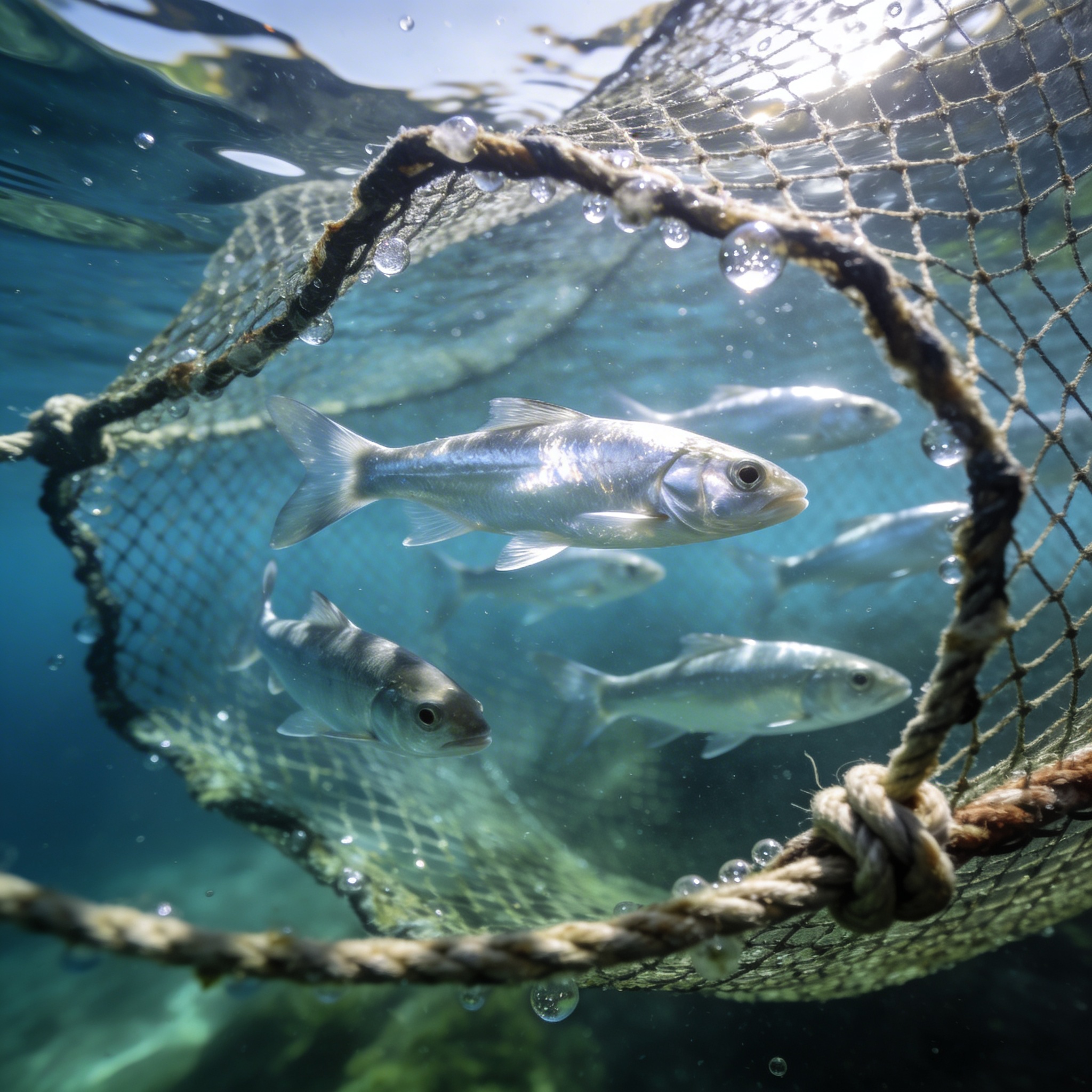
"As Jesus was walking beside the Sea of Galilee, he saw two brothers, Simon called Peter and his brother Andrew. They were casting a net into the lake, for they were fishermen. 'Come, follow me,' Jesus said, 'and I will send you out to fish for people.' At once they left their nets and followed him."
Peter didn't apply for the position. He didn't have a resume that qualified him. He was a working-class fisherman with calloused hands and the smell of the lake on him when Jesus walked by and changed the entire direction of his life.
What strikes most about this moment is the speed of it. At once, they left their nets. No committee meeting. No pros-and-cons list. No waiting to see if a better offer came along. Something about Jesus commanded a response that bypassed every reasonable objection.
But here's what we sometimes miss: Jesus didn't call Peter because of who Peter already was. He called him because of who Peter would become. 'I will make you' — those three words are a promise embedded inside the calling. The invitation wasn't just to go somewhere. It was to become someone.
Whatever season you're in right now, this is the same invitation. Not 'come to me because you've arrived,' but 'come, and I will make you.' The transformation is part of the deal. The calling always precedes the becoming.
Lord, I want to be the kind of person who leaves the nets quickly. Help me recognize your voice when you call, and give me the courage to move at once, even when I don't fully understand where I'm going. Amen.
The Name Change
"You are Simon... You will be called Cephas"
John 1:42
"Jesus looked at him and said, 'You are Simon son of John. You will be called Cephas' (which, when translated, is Peter)."
Before Peter did anything — before he preached a sermon, walked on water, or denied Jesus three times — Jesus gave him a new name. That sequence matters enormously. The new identity came before the performance. The name was a gift, not a reward.
Simon means 'he who hears.' Peter means 'rock.' In one sentence Jesus was saying: I see who you are right now, and I see who you're becoming. Both are true at the same time. That's the nature of grace — it speaks to a future that your present can't yet see.
Peter would spend most of his life growing into that name. He would be anything but a rock in many critical moments — impulsive, inconsistent, sometimes cowardly. And yet Jesus never took the name back. He didn't say 'you had your chance to be Peter, now you're Simon again.' The name stuck because it was rooted in what Jesus saw, not what Peter managed to achieve.
You may have a sense of who God has called you to be that feels completely at odds with who you currently are. That tension isn't evidence that you heard wrong. It might be exactly the distance grace is designed to cover.
Jesus, you know my real name — the one that reflects who you're making me, not just who I've been. Help me live into that name today, even when it feels too big for me. Amen.
The Confession
"You are the Messiah, the Son of the living God"
Matthew 16:13-17
"'But what about you?' he asked. 'Who do you say I am?' Simon Peter answered, 'You are the Messiah, the Son of the living God.' Jesus replied, 'Blessed are you, Simon son of Jonah, for this was not revealed to you by flesh and blood, but by my Father in heaven.'"
This was Peter's finest hour — and Jesus was quick to tell him why it didn't belong entirely to Peter. 'This was not revealed to you by flesh and blood.' In other words: you got this right, but not because you're smarter or more spiritually astute than the others. The Father showed you.
Peter had his moments of profound revelation and his moments of profound failure, sometimes within the same chapter. Immediately after this confession, Jesus rebukes him sharply — 'Get behind me, Satan!' — because Peter tried to talk Jesus out of going to the cross. Same conversation. Same man. Heaven-sent insight in one breath, an obstacle to God's plan in the next.
This is the unsettling, liberating reality of how God works through ordinary people: the gifts, the clarity, the moments of genuine spiritual breakthrough — they come from God, not from our own excellence. That's humbling when things go well and hopeful when they don't.
You don't have to manufacture insight or spiritual maturity. Your job is to stay close enough to the Father that when he reveals something, you're positioned to receive it and say it out loud.
Father, let my best moments be yours. And in my worst moments, remind me that even those don't disqualify me from hearing your voice again. Keep revealing yourself to me. Amen.
Walking on Water
"Lord, if it's you, tell me to come"
Matthew 14:28-31
"'Lord, if it's you,' Peter replied, 'tell me to come to you on the water.' 'Come,' he said. Then Peter got down out of the boat, walked on the water and came toward Jesus. But when he saw the wind, he was afraid and, beginning to sink, he cried out, 'Lord, save me!'"
Let's be honest about something: Peter was the only one who got out of the boat. Eleven other disciples sat there and watched. Peter — impulsive, overpromising Peter — was the one who asked, and then actually did it. He walked on water. We remember the sinking, but before the sinking there was the walking.
The moment he took his eyes off Jesus and focused on the wind and the waves, he began to sink. Not all at once — 'beginning to sink' implies a process. There was a moment where he could have refocused. But fear has a way of narrowing your vision until the storm is all you can see.
What Jesus said next wasn't a speech. He reached out his hand and caught him. Then the question: 'Why did you doubt?' Not 'why did you get out of the boat?' The getting-out-of-the-boat was right. The doubt was what interrupted the miracle.
The most dangerous place in a storm is sometimes the boat — the familiar, safe structure that keeps you from discovering what Jesus can do when you trust him in impossible circumstances. Peter got wet. But Peter also walked on water. Which part of his story do you want to claim as your own?
Lord, give me the courage to get out of the boat. And when I start to sink — because sometimes I will — reach out your hand before I finish going under. Amen.
The Transfiguration
"Let us put up three shelters"
Luke 9:28-33
"Peter and his companions were very sleepy, but when they became fully awake, they saw his glory and the two men standing with him. As the men were leaving Jesus, Peter said to him, 'Master, it is good for us to be here. Let us put up three shelters — one for you, one for Moses and one for Elijah.' (He did not know what he was saying.)"
Even in the middle of a divine encounter, Peter defaulted to doing something. The glory of God was literally radiating in front of him — Moses and Elijah had appeared — and Peter's instinct was to build a construction project. Let us set up some tents. Let us manage this. Let us create a structure to contain what we're experiencing.
Luke is gentle but honest: he did not know what he was saying. It wasn't a bad impulse. Peter loved Jesus. He wanted to honor the moment. But sometimes our drive to do, to produce, to make something happen is actually a way of avoiding the terrifying simplicity of just being present with God.
Then the cloud came, and the voice: 'This is my Son, whom I have chosen; listen to him.' Not 'build things for him.' Not 'develop a strategy around him.' Listen. Sometimes the most spiritual thing you can do is stop talking and stop building and simply be still.
Many of us — especially those wired to lead, create, and build — have to actively practice the discipline of being present before God without an agenda. Peter's tendency to fill divine silence with human activity is one of the most relatable things about him.
God, I confess I sometimes fill your presence with my own noise. Today I want to slow down, quiet the builder in me, and just listen to what you want to say. Amen.
The Foot Washing
"You shall never wash my feet"
John 13:6-9
"He came to Simon Peter, who said to him, 'Lord, are you going to wash my feet?' Jesus replied, 'You do not realize now what I am doing, but later you will understand.' 'No,' said Peter, 'you shall never wash my feet.' Jesus answered, 'Unless I wash you, you have no part with me.' 'Then, Lord,' Simon Peter replied, 'not just my feet but my hands and my head as well!'"
Peter's refusal to let Jesus wash his feet looks like humility, but it was actually a form of pride. He couldn't bear the reversal — the Rabbi becoming the servant, the Lord getting on his knees. It felt wrong in a way that offended his sense of order.
But Jesus was insistent: 'Unless I wash you, you have no part with me.' Receiving grace isn't optional. You cannot follow Jesus while simultaneously refusing to let him serve you, clean you, tend to the parts of you that are dirty and tired and worn. The refusal to receive is its own kind of pride.
And then Peter swings the other direction immediately: then wash all of me! From complete refusal to complete excess in two sentences. He didn't know how to receive grace in measured doses — it was all or nothing.
Most of us are somewhere in this story. Either we're refusing to let Jesus near the dirty parts — insisting we'll clean up first before coming — or we're overwhelmed and want to drown in it. The invitation is somewhere in between: let me wash your feet. Just that. One humble, necessary thing.
Lord, I don't always know how to receive your grace. I either push it away or try to get more than I need. Teach me to simply receive what you offer, one day at a time. Amen.
The Big Promise
"I will never fall away"
Matthew 26:33-35
"Peter replied, 'Even if all fall away on account of you, I will never fall away.' Jesus answered, 'Truly I tell you, this very night, before the rooster crows, you will disown me three times.' But Peter declared, 'Even if I have to die with you, I will never disown you.'"
Peter wasn't lying when he said it. That's what makes this moment so painfully human. He meant every word with every fiber of his passionate, impulsive heart. His love for Jesus was real. His courage felt real. His declaration wasn't manipulation or performance — it was sincere.
But sincerity isn't the same as strength. Peter trusted his feelings more than he understood his own limitations. He had never been tested the way the next twelve hours would test him. He was measuring his commitment by how he felt at the dinner table, not by what would happen in the courtyard.
We do this too. We make declarations at the altar, in prayer, after a breakthrough — Lord, I'll never go back to that. I'll follow you anywhere. And we mean it. In that moment, we really, truly mean it.
There is a gap between who we intend to be and who we are under pressure. Most of us have lived in that gap. The question isn't whether we overpromise — it's what we believe about ourselves and about God's love when we inevitably fall short of our own declarations.
Lord, you knew what Peter was about to do before he finished his sentence, and you still broke bread with him. Meet me in my overpromising. Help me trust your grace more than my own resolve. Amen.
The Garden
"Could you not keep watch with me for one hour?"
Matthew 26:40-41
"Then he returned to his disciples and found them sleeping. 'Couldn't you men keep watch with me for one hour?' he asked Peter. 'Watch and pray so that you will not fall into temptation. The spirit is willing, but the flesh is weak.'"
An hour earlier, Peter had declared he would die for Jesus. Now he can't stay awake for him. The gap between intention and action had already begun to appear before the rooster ever crowed.
What moves me about this scene is the tenderness underneath Jesus's question. He wasn't only correcting Peter — he was telling him something crucial: 'Watch and pray so that you will not fall into temptation.' Jesus knew what was coming. He was trying to prepare Peter for the courtyard. Prayer was the preparation Peter skipped.
The spirit is willing, but the flesh is weak. This isn't an excuse — it's a diagnosis. And the treatment Jesus prescribed wasn't more willpower or a stronger commitment. It was prayer. The way you close the gap between your willing spirit and your weak flesh is not by gritting your teeth harder. It's by staying awake with God.
There are seasons where the most important spiritual discipline isn't a new strategy or a bold step of faith. It's simply staying awake. Paying attention. Not letting the weight of the moment pull you into a sleep you can't afford.
Jesus, you asked for one hour. I give you this moment. Wake me up to what you're doing and what's at stake. I don't want to miss what you're preparing me for because I couldn't stay awake. Amen.
The Sword
"Put your sword away"
John 18:10-11
"Then Simon Peter, who had a sword, drew it and struck the high priest's servant, cutting off his right ear. Jesus commanded Peter, 'Put your sword away! Shall I not drink the cup the Father has given me?'"
Peter showed up in the garden armed. Whatever he'd said about dying with Jesus wasn't just talk — he came prepared to fight. When the soldiers arrived, he didn't run. He drew his sword and swung.
His heart was in the right place. His method was completely wrong. He was fighting a spiritual battle with a physical weapon, using violence to protect a plan he didn't fully understand. Jesus hadn't asked to be protected. He had come to lay down his life.
How often do we reach for the wrong weapon in the right battle? We fight relational conflict with aggression instead of humility. We fight spiritual warfare with busyness instead of prayer. We fight fear with control instead of surrender. The instinct to act, to protect — it's not wrong. But the method matters enormously.
Jesus healed the man Peter wounded. In the middle of his own arrest, surrounded by soldiers, he stopped to restore what Peter's well-intentioned violence had broken. Jesus spent part of his passion narrative cleaning up Peter's mess — and did it without a word of condemnation.
Lord, take the sword out of my hand when I'm fighting battles your way. Teach me the difference between Spirit-led boldness and fear-driven striving. Amen.
The Denial
"I don't know the man"
Luke 22:54-62
"A servant girl saw him seated there in the firelight... She said, 'This man was with him.' But he denied it. 'Woman, I don't know him,' he said... About an hour later another asserted, 'Certainly this fellow was with him.' Peter replied, 'Man, I don't know what you're talking about!' Just as he was speaking, the rooster crowed. The Lord turned and looked straight at Peter."
Three times. Not once in a moment of weakness — three times, with escalating intensity, with an audience, by a fire in the middle of the night. By the third denial, Peter was calling down curses to prove his point. This wasn't a stumble. It was a full sprint in the wrong direction.
And then the rooster crowed. And Jesus turned and looked straight at Peter.
That look. Imagine it. Not rage — Luke doesn't say that. Just a look. Jesus, mid-trial, on his way to the cross, turned from the guards and found Peter's eyes across the courtyard. And Peter remembered. And he went outside and wept bitterly.
That look broke something open in Peter that his confident declaration at the table never could. You cannot become who God has called you to be while you still believe your own press. Sometimes the fall is what cracks you open. The failure wasn't the end of Peter's story — it was the beginning of the transformation that made him someone worth writing about two thousand years later.
Jesus, I've looked away before. I've shrunk back when it cost too much to stand up. Look at me the way you looked at Peter — not to shame me, but to call me back to who you made me to be. Amen.
The Empty Tomb
"He went inside and saw"
John 20:3-6
"So Peter and the other disciple started for the tomb. Both were running, but the other disciple outran Peter and reached the tomb first. He bent over and looked in at the strips of linen lying there but did not go in. Then Simon Peter came along behind him and went straight into the tomb."
John arrived at the tomb first but stood at the entrance. Peter arrived second — after being outrun — and went straight in. Even in his grief, even after his devastating failure, Peter couldn't hover at the threshold. He had to see for himself.
This is one of the most quietly profound details in the resurrection narrative. Peter, who three days earlier had denied Jesus three times and wept bitterly, didn't wait to be invited back. He ran to the tomb. He went inside. He looked.
The enemy would have you believe that failure disqualifies you from showing up at the places where God is at work. That the tomb is for the faithful, not the ones who fell. Peter's actions tell a different story. He ran anyway. He entered anyway.
He didn't know yet what he was seeing. The resurrection would take time to understand. But he was there. He was present. After everything — he showed up. Sometimes showing up after failure, even when you don't fully understand what you're looking at, is itself an act of profound faith.
Lord, give me Peter's impulse — to run toward you, not away from you, especially after I've fallen short. Whatever I find when I get there, let me find you. Amen.
The Breakfast on the Beach
"Do you love me?"
John 21:15-17
"When they had finished eating, Jesus said to Simon Peter, 'Simon son of John, do you love me more than these?' 'Yes, Lord,' he said, 'you know that I love you.' Jesus said, 'Feed my lambs.' Again Jesus said, 'Simon son of John, do you love me?' He answered, 'Yes, Lord, you know that I love you.' Jesus said, 'Take care of my sheep.'"
Three denials. Three questions. Jesus doesn't miss the symmetry — and neither does Peter. Each question lands in the exact place a denial once lived. This wasn't an interrogation. It was surgery. Precise, loving, necessary.
What's remarkable about this scene is what Jesus doesn't do first. He doesn't open with a performance review or a list of corrections. He makes breakfast. On a beach. After Peter had fished all night and caught nothing. Jesus was already cooking when they arrived.
Then the questions — not to twist the knife, but to heal the wound. Every 'Do you love me?' replaced a denial with an affirmation, spoken out loud, in the open air. And after each answer, a commission: Feed my lambs. Take care of my sheep. The restoration and the calling came in the same breath.
Notice what Jesus called Peter to — not a grander stage, not a more impressive title. Pastoral care. The man who failed publicly was trusted with the most vulnerable. This is what restoration looks like in the kingdom: not erasure, not pretending it didn't happen, but grace that transforms the site of failure into the foundation of a new calling.
Lord, I don't need a bigger platform. I need to hear you ask me that question and be brave enough to answer honestly. Ask me again. I'm listening. And then tell me what you need me to do. Amen.
Pentecost
"Peter stood up and raised his voice"
Acts 2:14, 36-38
"Then Peter stood up with the Eleven, raised his voice and addressed the crowd... 'Therefore let all Israel be assured of this: God has made this Jesus, whom you crucified, both Lord and Messiah.' When the people heard this, they were cut to the heart and said to Peter and the other apostles, 'Brothers, what shall we do?'"
Fifty days earlier, this man was hiding behind a closed door. Now he is standing in the streets of Jerusalem — in front of the same city that killed Jesus — boldly declaring the resurrection to thousands of people. Three thousand came to faith that day.
The same Peter. The same voice that said 'I don't know him' at the campfire now shook a city. The transformation isn't explained by Peter somehow fixing himself. It's explained by the Holy Spirit.
Peter didn't become bold because he worked harder or summoned more willpower. He became bold because the Spirit of the living God moved through him in a way that made his own fear irrelevant. He wasn't performing. He was channeling something greater than his own courage.
And notice what God didn't change: Peter was still direct. Still passionate. Still the first to speak. God didn't sand down his personality and replace it with something more refined. He sanctified what was already there. Your greatest weaknesses and your greatest strengths often share the same root.
God, I've spent a long time trying to become someone worthy of being used. Remind me that Peter wasn't worthy either, and that was kind of the whole point. Use me as I am, and do what only you can do. Amen.
The Stumble at Antioch
"I opposed him to his face"
Galatians 2:11-13
"When Cephas came to Antioch, I opposed him to his face, because he stood condemned. For before certain men came from James, he used to eat with the Gentiles. But when they arrived, he began to draw back and separate himself from the Gentiles because he was afraid of those who belonged to the circumcision group."
Here's the part of Peter's story we don't put on motivational posters. This isn't a young, unformed Peter in the early days of following Jesus. This is the Peter of Pentecost. The Peter who preached to thousands, performed miracles, and was personally restored by the risen Christ on a beach.
And he buckled under social pressure. He was eating with Gentile believers freely — living out the vision of a unified church — until a delegation from Jerusalem arrived. Then he pulled back. Separated himself. Played to the crowd. And Paul had to call him out publicly.
The greatest preacher of the early church, years into his ministry, was still capable of fear-driven compromise. Still growing. The Christian life is not a clean upward arc from failure to glory. It is a long, sometimes halting journey of growing in grace — which means you need grace not just at the beginning, but at every stage.
Peter's stumble at Antioch is actually one of the most hopeful parts of his story. If the hero of Pentecost still needed correction and still received grace, then there is room for all of us in the middle of our own continuing growth.
Lord, keep me from living a divided life — one version of myself in front of the crowd and another when the pressure is off. Make me consistent. And when I'm not, bring the right people to speak truth to me. Amen.
The Final Word
"Grow in the grace and knowledge of our Lord"
2 Peter 3:17-18 / 1 Peter 5:10
"Be on your guard so that you may not be carried away by the error of the lawless and fall from your secure position. But grow in the grace and knowledge of our Lord and Savior Jesus Christ... And the God of all grace, who called you to his eternal glory in Christ, after you have suffered a little while, will himself restore you and make you strong, firm and steadfast."
Peter's last letters end with a call to keep growing. He wrote those words knowing his own history in full — the denials, the stumbles, the public failures, the correction at Antioch. He wasn't writing from a place of having arrived. He was writing from a place of having been kept.
The God of all grace, who called you to his eternal glory — will himself restore you. Not your discipline. Not your effort to do better next time. God himself will restore you and make you strong, firm, and steadfast. Those are words from a man who had been restored more than once, who had experienced that promise personally.
Jesus loved Peter at the dinner table before the denial. He loved him in the courtyard during it. He loved him on the beach after it. He loved him through Pentecost and through Antioch and through every stumble in between. That love was never contingent on Peter's performance. It was rooted in something deeper than Peter's worst day or his best sermon.
That's the whole story. Over-promising and under-delivering, getting back up, being restored, stumbling again, being restored again — all the way to the end. You are not too far gone. You have not over-promised your last promise. The breakfast is still warm. Jesus is still at the shore. The question is still being asked.
Do you love me?
And whatever your answer, his is already yes.
Jesus, thank you for loving Peter all the way through. Thank you that his story isn't cleaned up or tidy, because mine isn't either. Love me all the way through too. Grow me in grace — not in spite of my failures, but sometimes through them. I am yours. Amen.
────────────────────────────
"And the God of all grace, who called you to his eternal glory in Christ,
after you have suffered a little while, will himself restore you
and make you strong, firm and steadfast."
— 1 Peter 5:10
Written by
Wes ShinnWes Shinn is a visual storyteller, photojournalist, filmmaker, and minister whose life and calling have been forged in some of the most demanding arenas a creative can inhabit.