Invisible Wounds

Romans 8:15
"For you did not receive the spirit of slavery to fall back into fear, but you have received the Spirit of adoption as sons, by whom we cry, 'Abba! Father!' "
Invisible Wounds
The Hidden Battle for Your Identity in Christ
"The thief comes only to steal and kill and destroy. I came that they may have life and have it abundantly."
— John 10:10
I. THE WOUND YOU CANNOT SEE
What Is Hidden Is Still Wounding You
There is a kind of wound that leaves no scar on the skin. It does not appear on an x-ray. No one in the grocery store, the church lobby, or even your own home can necessarily see it. And yet it shapes everything — the way you speak to your spouse, the way you recoil from authority, the way you shrink back from the calling God has plainly written over your life, the way you say yes to what you should refuse and refuse the very things your soul was made for.
I know this because I have lived it from the very beginning.
I was born from a rape. My biological mother was sixteen years old. By every measure of this world, my life should not have started — and yet God had written my name before the foundation of the world. I was adopted into a family that loved me and raised me in faith. But the wound of early separation planted something deep that no amount of love could immediately reach: an attachment wound that would take me decades to fully name, a quiet war between the desperate desire to be loved and the terror that love itself would one day leave.
I did not have language for it then. Most of us don't. That is the nature of invisible wounds — they do not introduce themselves. They simply shape the architecture of how you move through the world: what you reach for, what you protect, who you let close, and how far you let them come.
The wound of abandonment says: you are not worth staying for.
The wound of abuse says: your body and soul are not safe in anyone's hands.
The wound of rejection says: there is something fundamentally unacceptable about you.
The wound of shame says: you are what was done to you — what you could not prevent, what you carry in the dark.
And the most dangerous thing about these wounds is not what they make you feel. It is what they make you believe.
Every invisible wound is a potential entry point — not because the wound itself is sinful, but because unexamined, unhealed, unsurrendered wounds become the soil in which the enemy's lies take root. He is not primarily interested in your behavior. He is interested in your identity. Because a man or woman who truly walks in the fullness of who they are in Christ is one of the most dangerous forces on the face of the earth to the kingdom of darkness.
So he comes where you are most tender. He finds the wound and sets up camp beside it. He whispers in the same frequency as your pain, and over time you can no longer tell the difference between what happened to you and who you actually are.
The lie does not announce itself. It simply sounds like your own thoughts.
For years, I could not tell the difference. The wound was so familiar it had become my identity. What I now understand was an orphan spirit — what psychology calls an attachment wound — I had simply called myself. That was just who I was. Guarded. Driven. Performing. Keeping people close enough to feel safe and never close enough to know the truth.
But Jesus sees the wound. He has always seen it. And he has not come to manage it. He has come to redeem it.
II. THE DRIFT
Who Told You That You Were Naked?
"He said, 'Who told you that you were naked? Have you eaten of the tree of which I commanded you not to eat?'"
— Genesis 3:11
One of the most haunting questions in all of Scripture was asked by God in a garden to a man hiding in the bushes. Not — Did you eat the fruit? Not — Why did you disobey me? But: Who told you?
God was tracing the origin of a false identity. Adam had taken on a definition of himself that did not come from the One who made him. He received a word about who he was — and it was a lie — and now he was living out of that lie, hiding from the very Presence that was his home.
I gave my life to Christ at eighteen. My mother had been diagnosed with cancer, and in that crisis a youth pastor stepped in — and then God supernaturally removed that cancer in a moment that has not returned to this day. That encounter was undeniable. But salvation opens a door that the soul still has to walk through. And walking through it fully requires a surrender I was not yet ready to give.
In my twenties, serving in the military in Hawaii, I was raped by a woman. The wound that already existed around intimacy and trust — the attachment wound that began at birth — went deeper. I never told anyone. I hardened. I carried it silently the way men are taught to carry things that break them: forward. Faster. Into more achievement, more competence, more distance from anything that required me to be known.
I met Keiko — and I knew immediately it was a miracle from God. But even in the arms of a marriage built by God, I spent fifteen years operating from that same divided place: knowing who I was in Christ, but living out of who I had always been in the wound. Pride. Manipulation. Shame masked as confidence. The false self performing where the true self was too afraid to stand.
This is what the drift looks like. It is not dramatic. It is a thousand small choices to build your life around the wound rather than around the Word. And the tragic thing is that you can do it inside a life that looks like faith — inside ministry, inside marriage, inside the church — and never realize how far you have drifted from the person God always intended you to be.
You can know the Word and never let it reach the deepest places. I know because I did it for fifteen years.
Your true identity was established before you drew your first breath. Before the wound. Before the word spoken over you in anger, in silence, in cruelty. Before the moment that split your life into before and after. In Christ, you have been chosen, adopted, redeemed, and sealed. These are not aspirational statements. They are the most true things about you — more true than the wound, more true than the lie, more true than everything the drift has told you.
The question God asked in the garden is still the question: Who told you? And the follow-up is equally important — are you willing to stop listening to that voice?
III. FOUR CHAINS
The Ways Wounds Hold Us
Invisible wounds rarely travel alone. They tend to produce — and be compounded by — four interlocking forces that keep us from the fullness of life in Christ. I am not writing about these from a distance. I carried every one of them.
Shame. Shame is not the same as guilt. Guilt says: I did something wrong. Shame says: I am something wrong. Guilt, properly understood, leads you toward the cross — toward repentance, restoration, the covering of Christ's blood. But shame leads you away from the cross, because shame tells you that you are too far gone even for grace.
For decades, I carried shame I could not name. The shame of being born the way I was born — as if my origin were somehow a verdict on my worth. The shame of what was done to me in Hawaii — carried in silence, never spoken, compounding over years into a hardness I called strength. The shame of who I had become in my marriage — a man who knew better, believed better, preached better than he lived.
The woman with the issue of blood had been bleeding for twelve years — twelve years of being considered unclean, untouchable, invisible. She came behind Jesus in the crowd and touched the hem of his garment. When he stopped and asked who had touched him, she fell before him trembling and told him the whole truth. Not just the miracle. The twelve years. The isolation. The shame. And Jesus called her daughter. Shame kept her hiding in the crowd. Only full exposure brought her into the identity she had been denied. The presence of God is not where shame is confirmed. It is the only place shame is permanently broken.
Fear. There are two kinds of fear, and your invisible wounds determine which one is running you. The first is the fear born of wounding — fear of rejection, abandonment, failure, exposure. This fear is a prison. It kept me performing for decades, kept me building walls that looked like confidence, kept me making decisions not out of faith but out of self-protection. Romans 8:15 calls it the spirit of slavery — and I was fluent in it.
The second is the fear of the Lord. And here is where wounded believers get confused — they know fear only as a captor, so when Scripture speaks of fearing God, it sounds like more bondage. But the fear of the Lord is not terror. It is the trembling of a worshipper before a throne of grace. It is the awe that reorders everything — that puts every other fear in its proper, small place. It is not the crouching fear of a slave. It is the undone reverence of a son who has finally seen who his Father actually is.
I will tell you more about what that encounter with holy fear did in me. But first, the other two chains.
Heaviness and Depression. Often at the root of seasons of depression is the exhausting weight of carrying wounds that were never designed to be carried alone. Elijah — one of the most powerful prophets in Scripture — collapsed under a broom tree after the greatest victory of his ministry and asked God to take his life. He was not weak. He was depleted. Afraid. Convinced he was alone.
I understand Elijah. There were seasons — especially in the years before my breaking point — when the gap between who I appeared to be publicly and who I actually was privately became so wide that sustaining it required everything I had. The weight of the secret. The weight of the wound. The weight of performing health I did not possess.
God did not rebuke Elijah. He fed him. Let him sleep. Sent an angel to touch him and say simply: the journey is too great for you. This is the tenderness of Jesus toward the heavy laden. He does not demand performance. He offers rest — the rest of a yoke shared, a burden redistributed, a weight carried with One who is strong enough to hold what you cannot. But invisible wounds make letting go feel impossible, because the weight, as terrible as it is, has become familiar. At least familiar pain is predictable.
Unforgiveness. There is a cruel irony at the center of unforgiveness: the person who hurt you has moved on, and you are the one still locked in the cell. Unforgiveness feels like justice. Holding it feels like the least you can do to honor the severity of what was taken from you. I understand that feeling intimately.
But unforgiveness keeps the wound perpetually open. Every time the memory surfaces, every time a similar trigger appears, the wound is reopened — not by the original offender anymore, but by you, by the rehearsal of the offense. It distorts your view of God. It limits your capacity to receive love. It costs emotional capacity and creative energy that God intended for something far greater.
Jesus forgave from the cross in real time — not after the resurrection, not once he had processed it, while it was happening. He modeled what he asks of us — not because the wound was small, but because the freedom on the other side is worth everything the forgiveness costs.
IV. THE ONLY CURE
Why the Presence of God Changes Everything
"Now the Lord is the Spirit, and where the Spirit of the Lord is, there is freedom."
— 2 Corinthians 3:17
In February 2026, at two in the morning, I encountered the presence of God in a way that defied every category my theology had prepared me for.
My wife Keiko had looked at me — months before this night — in despair and told me she didn't love me anymore. Those words did not destroy me. They broke me open. They shattered the performing self in a way that years of accountability partners, counseling, and religious discipline had not been able to touch. I stopped striving and started pursuing — not out of religious obligation, but out of desperate, irreducible need.
On that February night, I was in prayer when I saw a vision of Keiko, a dove hovering over her in the spirit. I reached for the dove — and stepped out of the vision. When I returned to where I had been praying, I found myself physically frozen. I could not move. I was fully aware, fully present, but completely arrested — held by something I had no framework for. There was no pain. Only weight. Holy, immovable weight.
A figure appeared. Gold like diamonds on the robe. A brightness that made a face impossible to see. A presence that was unlike anything I have encountered in this world — not frightening in the way fear is frightening, but vast in a way that makes everything else suddenly small.
And the figure spoke. I will write these words exactly as I received them, because they are not mine:
"My presence brings fear because love is who I am and truth is what I see.
Shame and rejection do not know me — because they are of the enemy,
and wherever I am, they cannot exist because of my presence.
Perfect fear casts out shame.
Peace be inside your mind because I am rewiring the circuits of your neurons.
You are mine. You belong to me.
The fear of me brings peace because I love you. I claim you."
What years of counseling, accountability, self-improvement, and religious effort could not do — the presence of God did in one night. Not because those tools have no value. But because some chains are not put on by human hands, and they cannot be removed by human effort alone.
I want to be careful here. I am not saying God never uses process. He uses time and community and professional care and the long obedience of surrender. He used all of those things in me. But I am saying that there is a dimension of healing that only encounter can produce — a direct collision with the presence and holiness of God that reorders the deep places no program can reach.
You are not too wounded for the Presence. You are too wounded to stay away from it.
Every chain named in this devotional — shame, fear, heaviness, unforgiveness — shares a common cure. Not a program. Not a formula. Not a better understanding of your wounds. The cure is the presence of God. And this is why invisible wounds are so strategically dangerous: they are specifically designed to keep you at a safe distance from the very thing that heals you.
Shame tells you to hide. Fear tells you exposure is dangerous. Heaviness tells you God is far and the distance is too great. Unforgiveness hardens your heart against the concept of unearned grace. Every wound, left unaddressed, quietly conspires to hold you at arm's length from your own healing.
But the presence of God is not a reward for the healed. It is the environment in which healing happens. You do not fix yourself and then enter his presence. You enter his presence — broken, honest, unmanaged — and he fixes you.
This is why reverent fear matters so profoundly. Not the fear that trauma taught you. Not the fear of punishment or rejection or being finally, fully seen and found wanting. The fear of the Lord — the trembling awe of a son who has come to understand who his Father actually is — is the thing that dismantles every other fear. When you are undone by the holiness and love of God, shame cannot survive in the same room. The lie loses its authority. The wound is still there — but it is now held inside a larger story, the story of a Father who sees everything and still calls you by name.
He called me by name that February night. He will call you by yours.
V. THE ONLY MOVE LEFT
Surrender Is Not the End of the Fight. It Is the Beginning of the Victory.
"But to all who did receive him, who believed in his name, he gave the right to become children of God."
— John 1:12
Everything in this devotional — every wound I have named, every chain I have described, every encounter I have shared — has been building toward a single word: surrender.
Not the surrender of a man who has lost and knows it. The surrender of a son who finally understands that striving was never the point. That the wound cannot be managed into healing. That the lie cannot be argued into silence. That the shame cannot be performed away. That the fullness of your identity in Christ is not something you achieve — it is something you receive. And receiving requires open hands.
I was born into impossible circumstances and placed into the arms of a family that chose me. That is the first picture of my life — an adopted son. And then, at eighteen, I was adopted again — into the family of God, not because of merit, but because a Father called my name before I could speak it.
But adoption is only the beginning. The question is whether you actually live as the son. Whether you walk in the house like someone who belongs there, or crouch near the door like a man still waiting to be told he has to leave. For most of my adult life, I crouched near the door. Performing. Striving. Managing. Keeping the wound close because it was familiar, even when it was killing me.
Surrender means bringing the wound into the light — to God, and where appropriate, to safe and trusted people — instead of managing it in the dark where it continues to grow. It means releasing the false identities built around the wound, even the ones that served you, even the ones that felt like protection. It means handing the people who hurt you to the only righteous Judge, not because they deserve release but because you need yours.
Surrender means expecting the fullness of Christ — not as a theological statement but as a daily, lived reality. That his peace is available to you today, in your actual circumstances. That his presence is accessible right now, not after you have cleaned yourself up. That the identity he purchased on the cross is yours to walk in this week — in your marriage, in your parenting, in your calling, in every ordinary moment he intended to be full of his glory.
I am still being restored. I want to be honest about that. The February encounter was real and it was transformative, but healing is not always instant, and I am not writing from a place of arrival. I am writing from a place of having been found — by a God who came all the way to the bottom of my wound, in the middle of the night, and claimed me.
You are not what was done to you. You are not your worst moment. You are a child of God. Stop letting the wound write the story.
You were not adopted into the family of God to spend the rest of your life managing your wounds and surviving your calling. You were adopted to walk as a son or daughter of the Most High — bearing his nature, carrying his authority, loving the people in your life from a healed and whole place rather than a broken and self-protective one.
The question is not whether Jesus is willing to meet you in the wound. He demonstrated his willingness on the cross, and he demonstrated it again to me in a room at two in the morning when I was finally desperate enough to stop performing and start surrendering. The question is whether you are willing — to open the door, to stop hiding, to release the debt, to receive the name he has always had for you.
"Behold, I stand at the door and knock. If anyone hears my voice and opens the door, I will come in to him and eat with him, and he with me."
— Revelation 3:20
He is already at the door. He has always been at the door. He is not standing there with a list of conditions. He is standing there with nail-scarred hands, knocking — and waiting for you to open it from the inside.
Open it. Not when you are healed enough. Not when you have your act together. Right now, with the wounds still tender and the lies still fresh and the fear still present.
He is enough for everything you bring him. He always has been. I am living proof.
A Prayer of Surrender
Father — I come. Not with my performance, not with explanations or excuses. I come with the wound, and the lie that grew beside it, and the shame that told me to hide, and the fear that kept me at a distance from You.
I name what I have been carrying: the unforgiveness I called justice, the heaviness I called personality, the false identity I called knowing myself. I have built a life around the wound instead of around You, and I am tired.
I renounce every agreement I have made with the enemy about who I am. I reject the voices that named me before You did. I open the door — fully, without reservation — and I invite Your presence into the places I have kept closed.
I receive my true name. I receive the identity You purchased. I receive the fullness You died to give me. Not tomorrow. Today.
I am Yours. Heal what only You can heal. Restore what only You can restore. And walk with me — close, not at arm's length — into the life You always intended.
In the name of Jesus. Amen.
For Reflection & Response
Take time with these questions in your journal, in prayer, or with a trusted person who is safe enough to hold what you bring.
› What is the invisible wound that has had the most influence over your decisions and relationships? Can you trace where it began — and can you name the lie it planted?
› What false identity have you been carrying? What voice first spoke it over you — and does that voice sound anything like your Father?
› Is there a shame you have never brought fully into the light — to God, or to safe people? What would it cost you to stop hiding that part of your story?
› Who do you need to forgive? What has unforgiveness cost you — and what might freedom give back to you?
› Have you ever had a genuine encounter with the presence and fear of the Lord — not a performance of worship, but a real collision with who God is? If not, are you willing to stop managing the distance and actually ask for one?
› What would full surrender look like in the specifics of your actual life this week? What would you do differently as a child of God who is not surviving, but reigning?
The Adopted Son Devotional
Written for those learning to receive their true name.
Written by
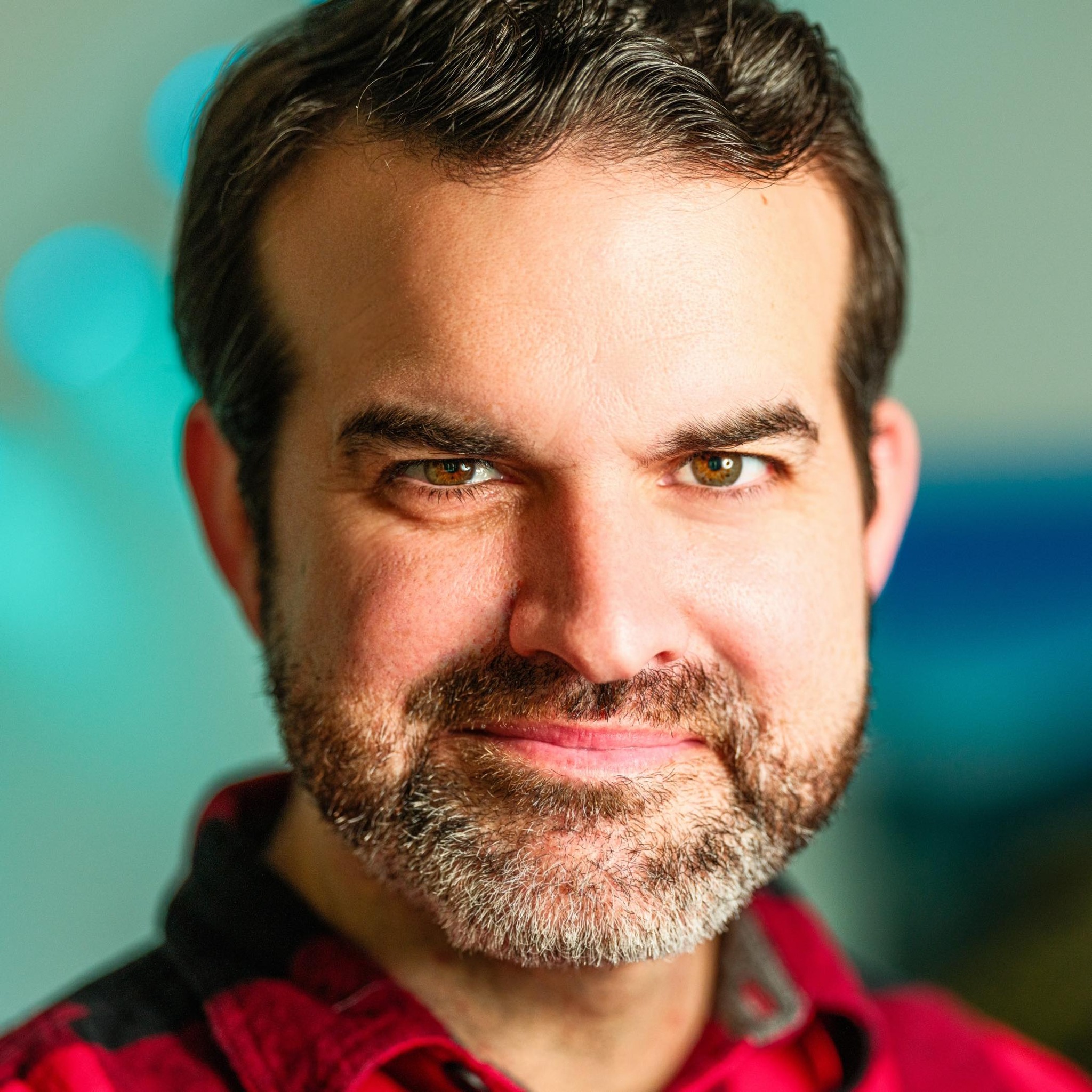
Wes ShinnWes Shinn is a visual storyteller, photojournalist, filmmaker, and minister whose life and calling have been forged in some of the most demanding arenas a creative can inhabit.