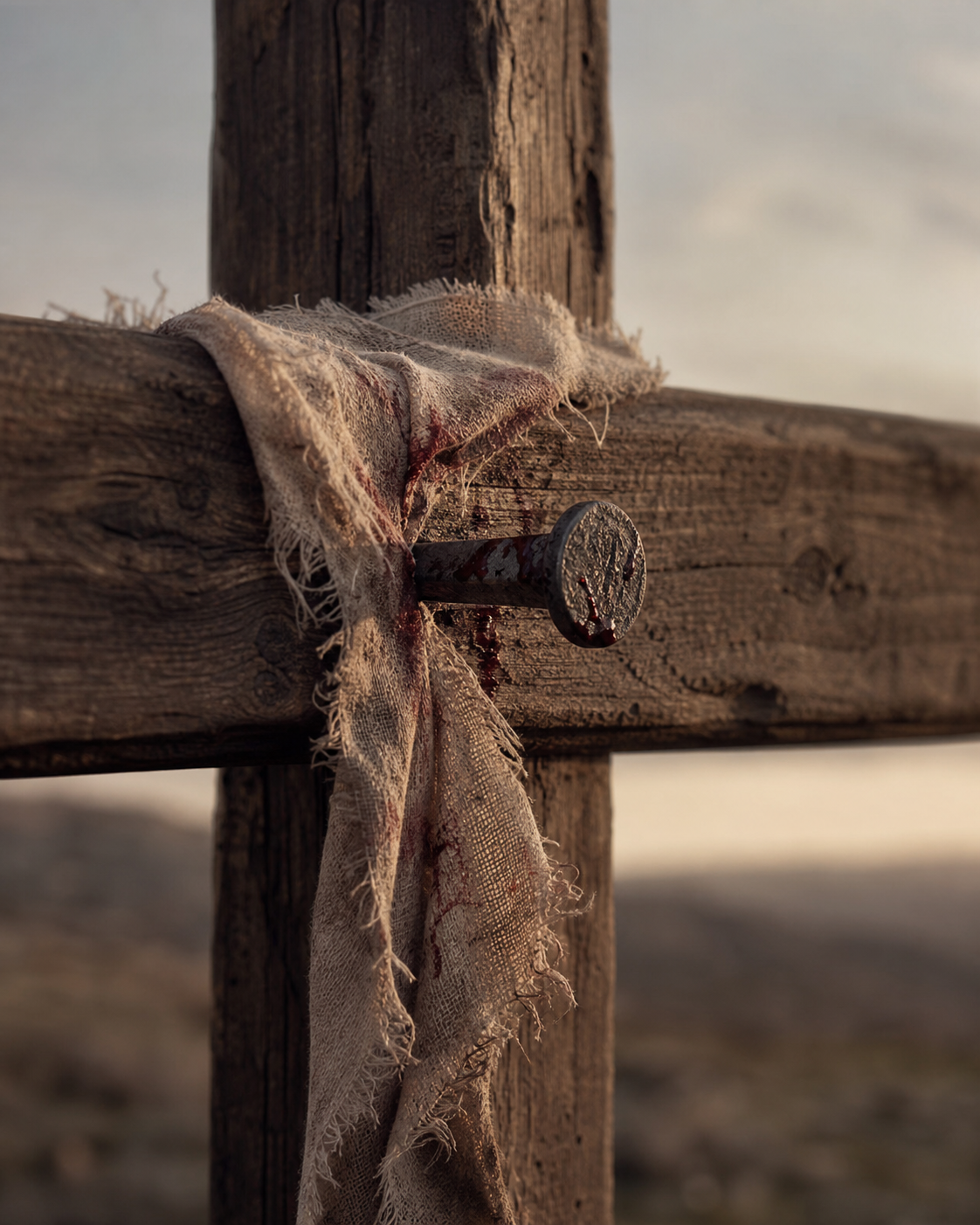
The Last Supper - Part 1

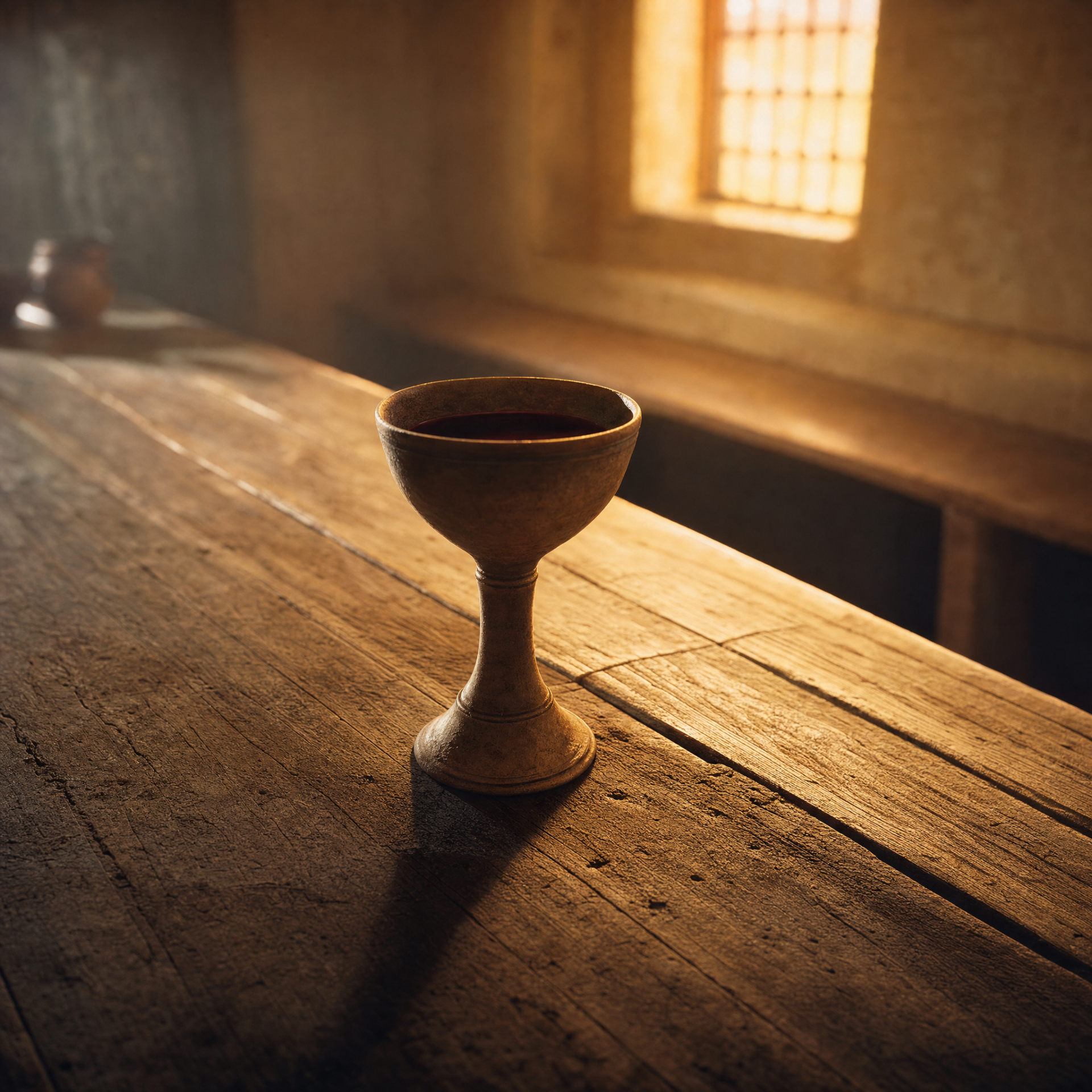
Matthew 26:27–29 (ESV)
"And he took a cup, and when he had given thanks he gave it to them, saying, “Drink of it, all of you, for this is my blood of the covenant, which is poured out for many for the forgiveness of sins. I tell you I will not drink again of this fruit of the vine until that day when I drink it new with you in my Father’s kingdom."
The Cup He Chose
What the Wine at the Last Supper Was Always Meant to Say
A NOTE FROM THE AUTHOR
I want to be honest with you before we begin.
This devotional was, in the most personal sense, written for me. Not because I doubted. Not because my faith was shaking or my theology was unraveling. But because somewhere in the rhythm of receiving communion time after time, I realized I had stopped asking questions about it. I was participating in one of the most profound acts in the history of the human story — and I was doing it on autopilot.
That bothered me. It should bother all of us.
So I started asking. Why wine? Why a meal? Why the upper room, why that night, why those twelve men, why those specific words over that specific cup? What was God doing with all of it — not just in that moment, but across the entire sweep of Scripture that had been building toward it? What did communion actually mean to the people in the room the first time it happened? And what was it supposed to mean to me every time I received it?
Everything you are about to read grew out of those questions. The history, the theology, the prophecy, the imagery — all of it was me chasing the intentionality of God in one of His most deliberate acts. Because I am convinced that nothing about the Last Supper was accidental. Not the wine. Not the room. Not the night. Not the people at the table. Not the words. Every detail was loaded. And I wanted to know what it was loaded with.
My hope is that by the time you finish, the next time you receive the cup, you will receive it differently. Not with more religious duty. With more weight. More wonder. A deeper sense of what it cost, what it sealed, what it promises, and whose table you are actually sitting at.
The cup has more to say than most of us have taken the time to hear.
_____
THE ROOM ITSELF: STEPPING INTO THE UPPER ROOM
Before we can understand what Jesus said over the cup, we need to be in the room. Not theologically or metaphorically — physically. We need to smell the air, feel the stone floor, and understand what it meant that twelve men climbed those stairs and shut the door behind them on the most consequential night in human history.
Why an upper room? In first-century Jerusalem, the upper room — the anogeon in Greek, aliyah in Hebrew — was the most private, most honored space in a home. It was elevated above the noise of the street, above the animals, above the marketplace, above the ordinary. To be invited to an upper room was to be invited into the inner circle. It was the room reserved for the closest relationships, for sacred conversation, for meals that mattered. Jesus did not choose a synagogue. He did not choose the Temple courts. He chose intimacy over institution — a private upper room for thirteen people — because what He was about to do required closeness that a public gathering could never hold.
Mark tells us it was a “large upper room, furnished and ready” (Mark 14:15). The Greek word for furnished, estromenon, suggests spread with cushions and rugs — a room deliberately prepared for reclining at table, the posture of free men celebrating a feast. Low tables. Cushioned couches arranged in a U-shape in the Roman triclinium style that wealthy Jerusalem households had adopted. Oil lamps cast warm, uneven light across the walls. The smell of roasting lamb drifted up from the lower floors of the city, mingling with the smoke of a thousand Passover fires across Jerusalem that night.
The city itself was electric. Jerusalem during Passover week swelled from perhaps 50,000 residents to as many as 200,000 pilgrims, some estimates higher. Josephus records figures in the hundreds of thousands. The streets were packed. Roman soldiers were on high alert. The Temple Mount was thick with the noise of animals, money changers, and the press of bodies. Political tension ran like a current through everything — the Zealots itching for revolution, the Pharisees watching for a misstep, Herod and Pilate both deeply uncomfortable with the size of the crowd and the name on everyone’s lips. Jerusalem in Passover week was a powder keg, and Jesus was the spark most feared.
And yet in that upper room, the noise fell away. The stairs were steep. The door was shut. And it was just them.
He didn’t need the crowds to change the world. He needed a table and twelve imperfect men.
What did the disciples feel walking up those stairs? Probably a complicated mixture of things that none of them would have been able to name. There was comfort — the Passover was the feast of their childhoods, the story their fathers had told them since before they could understand the words. There was anticipation — Jesus had spoken in strange, heavy tones all week, words that didn’t quite land but sat in the chest like stones. There was the residue of argument; Luke tells us that even on this night, before the meal was over, the disciples would break into a dispute about who among them was the greatest (Luke 22:24). Ambition and love sat side by side in that room. Devotion and confusion. Faith shot through with fear.
Judas was in the room. Let that settle for a moment. The one who had already arranged the betrayal, who had already negotiated the price of thirty pieces of silver, was reclining at the table, eating the lamb, hearing the words. Jesus knew. And He served him anyway. He washed his feet anyway (John 13:5). He handed him bread anyway (John 13:26). There is something almost unbearable about the tenderness of that — the way grace refuses to exclude even the one who is about to destroy it.
Grace served the betrayer before it saved the world.
They had begun the Passover Seder. The youngest among them — almost certainly John — would have asked the four questions, as tradition required: Why is this night different from all other nights? They had sung the Hallel psalms — Psalms 113 and 114 before the meal, Psalms 115 through 118 after. Matthew 26:30 tells us they sang a hymn before going out to Gethsemane. The last sound in that room before everything shattered was singing. They had eaten the bitter herbs that recalled the bitterness of slavery. They had dipped bread in charoset — the sweet paste of apples, dates, and nuts that recalled the mortar of Egyptian slavery. The senses were fully engaged: taste, smell, texture, and song. This was a feast designed to be felt in the body, not merely heard by the ears.
And then, after the meal, Jesus did something the Seder had never done before. He took the third cup — the Cup of Redemption —, and He stopped the liturgy. He held the cup up in the lamplight, and He said words that reinterpreted everything they thought they knew about the feast. The Passover they had celebrated every year of their lives suddenly collapsed into a single present tense. Every previous Passover had been a memory of Egypt. This one became a prophecy of a cross that was now less than twelve hours away.
Every Passover since Moses had been a dress rehearsal. This was opening night.
They did not fully understand. They would not understand until Sunday morning. But something in the room shifted when He said those words. John’s Gospel tells us the disciples were already grieving — Jesus had told them He was going away, that one of them would betray Him, that Peter would deny Him before sunrise. The oil lamps would have been burning low by then. The meal was winding down. The city outside was quiet after the feast. And in that weighted silence, in that lamplight, in that room elevated above the noise of a world that was about to kill their Rabbi, Jesus lifted the cup and said: " Drink this, all of you.
The upper room was not a sanctuary of serenity. It was a room full of imperfect, frightened, arguing, beloved men — men with ambitions they hadn’t surrendered and fears they hadn’t confessed — being handed something they didn’t fully understand by a God who loved them anyway. And two thousand years later, every time we come to the table, we come as the same kind of people. Not polished. Not fully understanding. Still arguing, still afraid, still full of things we haven’t surrendered. And the cup is offered again. Drink this, all of you.
BEFORE HE BROKE THE BREAD, HE LIFTED THE CUP
There is a moment in the upper room that we tend to read past too quickly. The disciples had reclined at a familiar table. They had sung the psalms they had sung since childhood. They had eaten the bitter herbs. They had asked the four questions. And then Jesus picked up a cup of wine — an ordinary vessel containing a fermented fruit of the earth — and said words that collapsed the entire history of redemption into a single swallow.
This was not an improvised gesture. This was not a rabbi reaching for what was available. Every element Jesus chose that night had been written into the fabric of creation long before He ever reclined at that table. The wine was not an accident of culture. It was a covenant statement. It was prophecy fulfilled in liquid form. And if we will slow down long enough to taste what He was actually doing, we will find that the cup Jesus lifted that night was one He had been holding — in one form or another — since before the foundation of the world.
I. THE VINE BEFORE THE CROSS: WINE IN THE ANCIENT WORLD
To understand why Jesus chose wine, you must first understand what wine meant to the people of the ancient Near East. In the Greco-Roman world, wine was the drink of civilization, of feasts, of covenant meals, and of the gods. But in the Hebrew tradition, wine carried a theological weight that went far deeper than culture.
The vine first appears in Scripture immediately after the flood. Noah, the second father of humanity, plants a vineyard (Genesis 9:20). This is not incidental. After the waters of judgment recede and the earth is reseeded, the vine is among the first things cultivated. Wine enters sacred history through the hands of a man who survived wrath by grace. Already, a pattern is being laid.
Then there is Melchizedek — priest of God Most High, king of Salem, a figure so mysterious that the writer of Hebrews will spend chapters unpacking what he represents. And what does Melchizedek bring out to greet Abram returning from battle? Bread and wine (Genesis 14:18). Not a blood sacrifice. Not incense. Bread and wine. The very two elements Jesus will take up at the Last Supper are first presented together by a priest-king whose order Jesus would later be declared to belong to forever (Psalm 110:4). The fingerprints of the upper room are on the story of Abraham.
You are a priest forever after the order of Melchizedek. — Psalm 110:4 (ESV)
Wine was also the language of covenant hospitality. In the ancient world, to share wine at a table was to share your life with another. To drink from the same cup was to enter into a bond. This is why covenant meals mattered — they were not merely celebratory. They were binding. They said, "I am with you." My resources are your resources. My protection is your protection. What I have, I give.
And in Israel specifically, wine was inseparable from worship. The daily temple offerings required a drink offering — wine poured out before the Lord morning and evening (Numbers 15:5–10). The Passover Seder, which Jesus was celebrating in the upper room, required four cups of wine, each tied to one of God’s four promises from Exodus 6:6–7. Wine was woven into the liturgical DNA of Israel’s entire relationship with God.
Historical Note: The four cups of the Passover Seder correspond to the four “I will” statements of God in Exodus 6:6–7: I will bring you out, I will deliver you, I will redeem you, I will take you as my people. Biblical scholars widely believe Jesus instituted the Lord’s Supper using the third cup — the Cup of Redemption — which followed the main meal.
II. SHADOWS AND PROPHECIES: THE OLD TESTAMENT POINTS TO THE CUP
The wine of the Last Supper did not appear without warning. The Old Testament is full of imagery, prophecy, and shadow that all pointed forward to what Jesus would say over that cup. When we read the Hebrew Scriptures with the upper room in view, we begin to see that God had been building toward this moment across centuries.
The Vine as the Image of Israel. In Isaiah 5:1–7, God sings a heartbreaking love song about His vineyard — Israel — that bore wild grapes instead of good fruit despite every care He gave it. The vineyard image recurs in Psalm 80:8, Jeremiah 2:21, Ezekiel 15, and Hosea 10:1. Israel was God’s vine. But the vine failed. It produced sour fruit. The covenant was broken. And yet God did not abandon the vine. He sent His Son — who would declare, “I am the true vine” (John 15:1). Where Israel the vine failed, Jesus the vine would not.
I am the vine; you are the branches. Whoever abides in me and I in him, he it is that bears much fruit, for apart from me you can do nothing. — John 15:5 (ESV)
The Cup of God’s Wrath. Throughout the prophets, the “cup” is a recurring image for divine judgment. Isaiah 51:17 describes Jerusalem drinking “the cup of his wrath” to the dregs. Jeremiah 25:15–17 commands the prophet to take “the wine cup of wrath” and make the nations drink from it. Psalm 75:8 declares, “In the hand of the Lord there is a cup with foaming wine, well mixed, and he pours out from it, and all the wicked of the earth shall drain it down to the dregs.” When Jesus, in Gethsemane, prays, “Father, if it is possible, let this cup pass from me” (Matthew 26:39), He is not speaking metaphorically about difficulty. He is speaking prophetically about wrath — the specific cup the prophets had described. He was about to drink it so we would not have to.
He himself bore our sins in his body on the tree, that we might die to sin and live to righteousness. By his wounds you have been healed. — 1 Peter 2:24 (ESV)
The Suffering Servant and the Poured Out Life. Isaiah 53 is the most precise prophetic portrait of the cross in all of Scripture, written roughly 700 years before Jesus was born. And embedded within it is the language of pouring out: “he poured out his soul to death” (Isaiah 53:12). Wine is poured. Blood is poured. A soul surrendered is poured. When Jesus said over the cup, “This is my blood of the covenant, which is poured out for many” (Mark 14:24), He was consciously echoing Isaiah’s language. He knew the script. He had written it.
Isaiah didn’t predict a tragedy. He previewed a plan.
The New Covenant Promise in Jeremiah. In Jeremiah 31:31–34, God makes a stunning announcement: the old covenant, written in stone and broken by Israel, will be replaced by a new one. “I will put my law within them, and I will write it on their hearts. And I will be their God, and they shall be my people.” This is the covenant Jesus explicitly invokes at the table. Luke’s account records Him saying, “This cup that is poured out for you is the new covenant in my blood” (Luke 22:20). He did not merely say covenant. He said new covenant — the very words Jeremiah had recorded six centuries earlier. This was the moment Jeremiah had been pointing to.
Six centuries of prophecy collapsed into one cup.
This cup that is poured out for you is the new covenant in my blood. — Luke 22:20 (ESV)
Zechariah’s Vision of the Precious Blood. Zechariah 9:11 contains a remarkable verse that is easy to overlook: “As for you also, because of the blood of my covenant with you, I will set your prisoners free from the waterless pit.” The blood of the covenant sets prisoners free. This is the grammar of the upper room. And Zechariah 12:10 prophesies the moment Israel — and through Israel, all humanity — looks on the one they pierced and mourns for Him as for an only son. These are not vague religious poems. They are precise coordinates pointing to a specific hill outside Jerusalem and a specific cup lifted in an upper room the night before.
God doesn’t work in vague impressions. He writes in addresses.
III. THE PASSOVER CONTEXT: WHY THIS MEAL, WHY THIS NIGHT
You cannot understand the Last Supper without understanding the Passover. Jesus did not randomly choose a dinner party to institute the Eucharist. He chose the Passover meal deliberately, with full theological intention. The Passover was the founding memory of Israel — the night God moved through Egypt, and death passed over every household covered by the blood of a lamb. It was the original exodus, the original redemption, the original sacrifice that made freedom possible.
And it had always been designed to be fulfilled. The Passover lamb was a shadow. The blood on the doorpost was a shadow. The feast was a shadow. Shadows point to something solid. When Paul writes that “Christ, our Passover lamb, has been sacrificed” (1 Corinthians 5:7), he is not drawing a creative metaphor. He is stating a fulfillment. Jesus is the lamb the feast had always been pointing to.
The shadow finally met the light it had been cast by.
The four Passover cups each carried a promise. The first cup, the Cup of Sanctification, declared: I will bring you out. The second, the Cup of Deliverance: I will deliver you. The third — the Cup of Redemption — was drunk after the meal. It is almost certainly this cup Jesus took and said, “This is my blood of the covenant.” The redemption cup. The blood cup. The cup that sealed what God had promised in Exodus was now being permanently ratified in the blood of God’s own Son.
And then there is the fourth cup — the Cup of Praise, the Cup of Completion. It is remarkable that in Matthew 26:29, Jesus says, “I tell you I will not drink again of this fruit of the vine until that day when I drink it new with you in my Father’s kingdom.” Many scholars believe Jesus deliberately left the fourth cup undrunk. He paused the Passover liturgy mid-sentence, so to speak, leaving the cup of completion on the table. The feast was not over. It would not be over until the marriage supper of the Lamb — the great Passover feast of the age to come. He was not just instituting a memorial. He was opening a story that would not close until He drank that cup in the Kingdom.
Communion isn’t a looking back. It’s a leaning forward.
Ponder This: John 19:30 records Jesus’ last words on the cross as “It is finished.” Moments before, the soldiers offered Him wine on a sponge (John 19:29–30), and He received it. Some theologians suggest this was the moment He finally drank the cup of completion — the fourth Passover cup — sealing the redemption in the very moment of death.
IV. BLOOD, WINE, AND COVENANT: WHAT THE CUP ACTUALLY SAID
To a first-century Jewish mind, the connection between wine and blood was not metaphorical in the way it sounds to modern ears. The deep grammar of the Hebrew covenant system was built on blood. Blood was life. “For the life of the flesh is in the blood,” God said in Leviticus 17:11, “and I have given it for you on the altar to make atonement for your souls, for it is the blood that makes atonement by the life.”
Every major covenant in the Old Testament was sealed in blood. The covenant with Abraham was sealed through split animals and a smoking firepot (Genesis 15). The covenant at Sinai was sealed when Moses took blood and sprinkled it on the people, saying, “Behold the blood of the covenant that the Lord has made with you” (Exodus 24:8). The entire sacrificial system — the daily offerings, the Day of Atonement, the peace offerings — was a blood system. Without blood, there was no atonement. Without atonement, there was no access to God.
The whole sacrificial system was a locked door. The cross was the key.
So when Jesus held up the cup and said, “This is my blood of the covenant,” He was speaking the most loaded theological language available to Him. He was saying: This wine represents the sacrifice that will seal the new covenant Jeremiah prophesied. The old covenant made at Sinai required the blood of bulls. The new covenant required something far greater. It required the blood of the one who made the covenant itself — the eternal Son.
The writer of Hebrews makes this explicit: “For if the blood of goats and bulls, and the sprinkling of defiled persons with the ashes of a heifer, sanctify for the purification of the flesh, how much more will the blood of Christ, who through the eternal Spirit offered himself without blemish to God, purify our conscience from dead works to serve the living God” (Hebrews 9:13–14). This is the argument. Animal blood covered sin temporarily, ceremonially, as a shadow. The blood of Christ — represented in that cup of wine — removes sin entirely, permanently, finally.
Animal blood whispered forgiveness. His blood shouted it.
He entered once for all into the holy places, not by means of the blood of goats and calves but by means of his own blood, thus securing an eternal redemption. — Hebrews 9:12 (ESV)
And “poured out for many” (Matthew 26:28) — that phrase reaches back again to Isaiah 53. The Suffering Servant would see the fruit of His travail and “make many to be accounted righteous.” Not a few. Many. The cup Jesus lifted was not a private transaction between Him and twelve men in a room. It was a cosmic offering, stretched across all of history, available to every son and daughter who would come.
He didn’t hold the cup for twelve. He held it for every broken person who would ever need it.
V. THE WRONG MEN IN THE RIGHT ROOM
Look around the table. Really look. Because the men reclining in that upper room are not who you would have chosen. They are not who any rabbi of the day would have chosen. And that is precisely the point.
Jesus had twelve disciples. By the time they sat down to that final Passover meal, He had been with them for three years. Three years of miracles witnessed, sermons heard, private teachings received. Three years of watching God walk among them. And yet what the Gospels give us is an unflattering portrait of men who were, by almost every measurable standard, unqualified for the task they were about to be given.
Peter was impulsive, loud, and emotionally volatile. He would be the first to declare Jesus the Messiah (Matthew 16:16) and the first to rebuke Him for it (Matthew 16:22). He would draw a sword in the garden within hours of this meal and cut off a man’s ear (John 18:10) — and then, before the rooster crowed twice, deny three times that he had ever known Jesus at all (Mark 14:66–72). Peter was brave in the wrong moments and a coward in the ones that counted.
James and John had earned the nickname Boanerges — Sons of Thunder — not as a compliment (Mark 3:17). They had asked Jesus for the two seats of highest honor in the Kingdom (Mark 10:37). Their mother had lobbied for it on their behalf (Matthew 20:20–21). On the very night of this supper, the disciples were still arguing about who among them was the greatest (Luke 22:24). These were not men who had mastered humility. They were men still jockeying for position at the very table where Jesus was about to model the most radical servant leadership the world had ever seen.
Thomas would famously refuse to believe the resurrection without physical evidence (John 20:25). The man who sat at that table eating Passover lamb with the Son of God would, just days later, need to press his fingers into nail wounds before he would accept that it had all been real.
Matthew had been a tax collector — a profession that, in first-century Jewish culture, carried the social equivalent of traitor and thief rolled into one. He had made his living collaborating with Rome, extracting money from his own people. The religious establishment would have considered him ceremonially unclean, morally compromised, and categorically disqualified from standing near anything holy.
Simon the Zealot sat at the same table as Matthew. The Zealots were the political revolutionaries of the day, committed to the violent overthrow of Roman occupation. The fact that a former Roman collaborator and an anti-Roman insurgent shared bread together without killing each other is itself a minor miracle — and a preview of what the gospel would do to every dividing wall it touched.
And then there were the ones the Gospels barely name — Bartholomew, Thaddaeus, Simon, James the son of Alphaeus — ordinary men from ordinary places, fishermen and laborers whose names would have meant nothing to anyone in Jerusalem. Not scholars. Not priests. Not the sons of influential families. Just men.
Jesus didn’t choose the qualified. He qualified the chosen.
And yet here they are. In the upper room. Reclining at the table of God. Receiving the cup from the hands of the eternal Son. Being entrusted with the words that would become the sacrament of the global church for the next two thousand years. The most consequential meal in human history was eaten by a group of men who, by every external measure, had no business being there.
This was not an oversight. This was not Jesus settling for what was available in a small province with limited options. This was a deliberate, theological statement about how God works. Paul would later articulate the principle explicitly: “For consider your calling, brothers: not many of you were wise according to worldly standards, not many were powerful, not many were of noble birth. But God chose what is foolish in the world to shame the wise; God chose what is weak in the world to shame the strong” (1 Corinthians 1:26–27). The upper room was the original proof of that principle.
But God chose what is foolish in the world to shame the wise; God chose what is weak in the world to shame the strong. — 1 Corinthians 1:27 (ESV)
The rabbinical system of Jesus’ day had a clear vetting process for disciples. A young man would study under a rabbi only if the rabbi believed he had the potential to become like his teacher. The best students got the best rabbis. The rest went home to learn their fathers’ trades, which is exactly what Peter, Andrew, James, and John had done. They were fishermen not because fishing was their passion, but because the religious establishment had already told them, in effect, that they didn’t have what it took. They had been evaluated and found ordinary.
And then Jesus came to the shore of the Sea of Galilee and called them anyway. Not because they had passed the test. Because He had chosen them. “You did not choose me, but I chose you,” He would tell them later that same evening (John 15:16). The initiative was never theirs. It was always His. And the cup He was about to hand them was not a reward for their faithfulness. It was an invitation into a grace that had nothing to do with merit.
The rabbis said: prove yourself and I will call you. Jesus said: I am calling you — now become yourself.
Every failure in that room that night had a name. Peter’s denial already had a time stamp — before sunrise. Judas’ betrayal had a price — thirty pieces of silver. The rest of the disciples’ abandonment had a location — the Garden of Gethsemane, where everyone of them would flee into the dark (Mark 14:50). Jesus knew all of it. He knew the exact shape of every failure that was still a few hours away. And He passed the cup anyway.
Let that land. He did not wait until they had proven themselves worthy. He did not hold the cup until they had their theology straight, their courage intact, and their loyalty tested. He handed it to them in the middle of their unfinished state — mid-argument, mid-confusion, mid-process — and said: This is for you.
He didn’t hand the cup to the finished version of them. He handed it to the version He found.
If you have ever sat at the edge of a communion table and wondered whether you belonged there — if you have ever held that cup and thought, “I am too much of a mess for this to mean what it’s supposed to mean” — then the upper room is your answer. You are no more disqualified than Peter, who would deny Jesus before morning. You are not more compromised than Matthew, who had built a career on betraying his own people. You are not more doubting than Thomas, who would need to touch the wounds before he would believe. You are not more ambitious and self-centered than James and John, who were arguing about their own greatness at the very table where the Son of God was preparing to die for them.
The cup was not designed for the pure. It was designed for the broken. It was not crafted for the ones who have it together. It was poured out for the ones who know they don’t. The qualification for receiving the cup of the new covenant is not moral achievement. It is hunger. It is thirst. It is the simple, desperate willingness to receive what you cannot earn.
Come, everyone who thirsts, come to the waters; and he who has no money, come, buy and eat! Come, buy wine and milk without money and without price. — Isaiah 55:1 (ESV)
The orphan spirit will always tell you that the table is for someone else. That there is a version of you that would be welcome — a cleaned-up, sorted-out, spiritually mature version — but that the current version needs to wait in the hallway until it qualifies. But that voice was not in the upper room. Jesus did not look at twelve flawed, frightened, arguing men and see their disqualifications. He looked at them and saw who they were becoming. He saw Peter the denier and called him the rock. He saw James and John, the thunder-brothers, and entrusted them with the beloved community. He saw Thomas the doubter and made his doubt the occasion for one of the greatest declarations of faith in all of Scripture: “My Lord and my God” (John 20:28).
He does the same thing with you. He does not see only who you are right now. He sees who you are being formed into. And He invites the current, unfinished, still-being-sanctified version of you to the table — not as a guest who might be asked to leave, but as a son. As a daughter. As someone whose name was written into the covenant before the foundation of the world.
The table was never for the worthy. It was built for the beloved.
VI. WHY DID GOD CHOOSE A MEAL?
This is one of the most important questions we can ask about the upper room. Of all the ways God could have established the memorial of His Son’s sacrifice — a monument, a written document, a ceremony performed by priests — He chose a meal. Why?
Because meals are where family happens. In the ancient world, the table was not merely a place to ingest calories. It was the geography of belonging. To eat with someone was to declare solidarity with them. This is why it was scandalous when Jesus ate with tax collectors and sinners (Luke 15:2). The religious establishment understood the theology of table fellowship perfectly. Eating together meant you were for each other. It meant intimacy, acceptance, shared life.
And God had always been in the business of table fellowship. In Exodus 24:9–11, Moses, Aaron, Nadab, Abihu, and seventy elders of Israel went up the mountain — and they saw God. And they ate and drank in His presence. The holiest moment in Israel’s founding covenant was sealed at a meal. In Revelation 3:20, the risen Jesus says, “Behold, I stand at the door and knock. If anyone hears my voice and opens the door, I will come in to him and eat with him, and he with me.” The invitation at the end of all things is not to a ceremony or a lecture. It is at a table.
God chose a meal because He wanted His sons and daughters to know: this is not a transaction. This is a relationship. The wine is not a formula. It is a shared cup between a Father, a Son, and every child who will come. He wanted the new covenant to be something His people would taste. Not just believe with their minds. Taste. Feel in the mouth. Drink down. Because the gospel is not an idea to be analyzed. It is a life to be received.
He didn’t send a treatise. He set a table.
Sonship Note: In the adoption culture of the first-century Roman world that Paul draws on in Romans 8, a son’s adoption was often sealed at a formal meal. The father would invite the son to his table and give him a cup. To drink was to enter the family. When Jesus gives us the cup, He is inviting us not just to receive forgiveness — He is inviting us into sonship. He is saying: sit down. This table is yours.
VII. THE CUP THAT IS STILL COMING: THE ESCHATOLOGICAL WINE
The wine of the Last Supper does not only look backward. It looks forward. And what it sees in the distance is breathtaking.
Isaiah 25:6–9 contains one of the most glorious visions in all of Scripture. The prophet sees the mountain of the Lord at the end of the age, and there is a feast: “On this mountain the Lord of hosts will make for all peoples a feast of rich food, a feast of well-aged wine, of rich food full of marrow, of aged wine well refined.” This is not a metaphor for a vague spiritual blessing. This is a specific eschatological feast — the wedding supper of the Lamb (Revelation 19:9), the great meal at the end of all things, when God finally and fully spreads His table before His children.
Amos 9:13–15 speaks of a day when “the mountains shall drip sweet wine, and all the hills shall flow with it.” Joel 3:18 echoes it: “the mountains shall drip sweet wine.” At Cana, Jesus turned 120 to 180 gallons of water into wine — a sign John places at the beginning of His ministry and calls “the first of his signs” that “manifested his glory” (John 2:11). Scholars have long noted that Cana points to both the abundance of the new covenant and the eschatological abundance of the age to come. At the beginning of His public ministry, Jesus declared with rivers of wine: the time of abundance is breaking in.
And then, at the Last Supper, He said He would not drink of the vine again until He drinks it anew in the Kingdom. Every time we take communion, we are not merely remembering a past event. We are participating in an ongoing covenant meal that will not be fully consummated until that final table. The cup is an anchor in time. It connects the cross behind us to the feast ahead of us. Paul captures this when he writes that every time we proclaim the Lord’s death through this meal, we do so “until he comes” (1 Corinthians 11:26).
For as often as you eat this bread and drink the cup, you proclaim the Lord’s death until he comes. — 1 Corinthians 11:26 (ESV)
VIII. WHAT HE IS HANDING YOU WHEN HE HANDS YOU THE CUP
Every time you receive the cup at the table — whether in a cathedral or a living room, whether from a silver chalice or a small plastic cup — you are receiving everything this devotional has described. You are receiving the covenant God made with Abraham in the darkness. You are receiving the promise God spoke through Jeremiah about hearts of flesh. You are receiving the blood that the writer of Hebrews says cries out a better word than the blood of Abel (Hebrews 12:24). You are receiving the fulfillment of every Passover ever celebrated. You are receiving the cup of wrath that Jesus drank, so you never will.
And you are being seated at a table. Not as a guest on the outside. As a son. As a daughter. The orphan spirit whispers that you are always on the outside of the feast — that you can watch from the doorway but not enter. But the cup Jesus offers tells a different story. He does not hand the cup to the worthy. He hands it to twelve men who were about to betray Him, deny Him, abandon Him, and doubt Him. He looks at them across the table and says: Drink this. This is for you. All of it is for you.
The cup was not handed to the worthy. It was handed to the hungry.
That is the grace of the cup. It is not handed to the clean. It is handed to the hungry. It is not a reward for faithfulness. It is the source of it. You do not drink the cup because you have arrived. You drink it because you need to arrive. And every time you drink it, He is reminding you: you belong here. The covenant is not suspended. The new covenant is written on your heart. You are not an orphan reaching through a fence at someone else’s table. You are a child of the house — and the Father Himself is pouring.
You didn’t earn a seat at this table. You were born into it.
You did not receive the spirit of slavery to fall back into fear, but you have received the Spirit of adoption as sons, by whom we cry, “Abba! Father!” — Romans 8:15 (ESV)
A Prayer at the Cup
Father, I receive what the cup means. Not just the history of it — but the weight of it.That Jesus drank the cup I deserved, so I could drink the cup He offers. I will not reach for it as a stranger. I will take it as a son. As a daughter.As one whose name is written in the new covenant by the blood of the One who loved me first. Let this cup do what You always intended it to do. Remind me whose table I’m sitting at. And whose child I am.Amen.
Reflect & Respond
1. When you take the cup, what are you most aware of — gratitude for forgiveness, or the weight of belonging? Ask the Holy Spirit to deepen both.
2. Jesus left the fourth cup undrunk, waiting for the Kingdom feast. How does it shift your perspective to know that every communion is a foretaste of a celebration still coming?
3. Where is the orphan spirit still telling you that the table is not yours? What would it look like to receive the cup as a son or daughter rather than as a stranger?
Continue with • Part Two: The Bread He Broke
The Adopted Son • theadoptedson.com
SCRIPTURE REFERENCES
All Scripture quotations, unless otherwise noted, are from the English Standard Version (ESV), © 2001 by Crossway, a publishing ministry of Good News Publishers.
Old Testament
Genesis 9:20 • Genesis 14:18–20 • Genesis 15:1–17 • Exodus 6:6–7 • Exodus 24:8–11 • Leviticus 17:11 • Numbers 15:5–10 • Psalm 75:8 • Psalm 80:8 • Psalm 110:4 • Isaiah 5:1–7 • Isaiah 25:6–9 • Isaiah 51:17 • Isaiah 53:1–12 • Jeremiah 2:21 • Jeremiah 25:15–17 • Jeremiah 31:31–34 • Ezekiel 15 • Hosea 10:1 • Joel 3:18 • Amos 9:13–15 • Zechariah 9:11 • Zechariah 12:10
New Testament
Matthew 26:17–30 • Mark 14:12–25 • Luke 22:14–20 • John 2:1–11 • John 15:1–5 • John 19:28–30 • Romans 8:15 • 1 Corinthians 5:7 • 1 Corinthians 11:23–26 • Hebrews 9:11–14 • Hebrews 12:24 • 1 Peter 2:24 • Revelation 3:20 • Revelation 19:9
HISTORICAL & THEOLOGICAL SOURCES
Bock, Darrell L. Jesus According to Scripture: Restoring the Portrait from the Gospels. Grand Rapids: Baker Academic, 2002.
Bruce, F. F. The Epistle to the Hebrews. New International Commentary on the New Testament. Grand Rapids: Eerdmans, 1990.
Jeremias, Joachim. The Eucharistic Words of Jesus. Trans. Norman Perrin. London: SCM Press, 1966. [The foundational scholarly work on the Passover context of the Last Supper and the four cups.]
Keener, Craig S. The Gospel of John: A Commentary. 2 vols. Peabody: Hendrickson, 2003. [For the wine at Cana as eschatological sign.]
Lane, William L. The Gospel of Mark. New International Commentary on the New Testament. Grand Rapids: Eerdmans, 1974.
Motyer, J. Alec. The Prophecy of Isaiah: An Introduction and Commentary. Downers Grove: IVP Academic, 1993. [For Isaiah 53, the vineyard song, and the eschatological feast of Isaiah 25.]
Scott, James M. Adoption as Sons of God: An Exegetical Investigation into the Background of HUIOTHESIA in the Pauline Corpus. Tübingen: Mohr Siebeck, 1992. [For the Roman adoption and table-fellowship framework underlying Romans 8:15.]
Wenham, Gordon J. Genesis 1–15. Word Biblical Commentary, vol. 1. Waco: Word Books, 1987. [For Noah’s vineyard and the Abrahamic covenant passages.]
Wright, N. T. Jesus and the Victory of God. Christian Origins and the Question of God, vol. 2. Minneapolis: Fortress Press, 1996. [For the Passover and Last Supper as deliberate prophetic enactment.]
HISTORICAL & CULTURAL BACKGROUND
Edersheim, Alfred. The Temple: Its Ministry and Services. London: Religious Tract Society, 1874. Rep. Peabody: Hendrickson, 1994. [For the daily drink offerings and temple wine liturgy.]
Edersheim, Alfred. The Life and Times of Jesus the Messiah. 2 vols. London: Longmans, Green, 1883. Rep. Peabody: Hendrickson, 1993. [For the Passover Seder structure and the four cups in first-century Jewish practice.]
Haggadah shel Pesach (The Passover Haggadah). Various traditional editions. [Primary liturgical source for the Passover Seder structure and the four cups of redemption.]
Mishnah Pesachim 10. [Rabbinic tractate detailing the Seder obligations, including the four cups and their liturgical order.]
Satterthwaite, Philip E., Richard S. Hess, and Gordon J. Wenham, eds. The Lord’s Anointed: Interpretation of Old Testament Messianic Texts. Grand Rapids: Baker, 1995. [For Psalm 110:4 and the Melchizedek typology.]
Stein, Robert H. “Last Supper.” In Dictionary of Jesus and the Gospels. Ed. Joel B. Green and Scot McKnight. Downers Grove: IVP, 1992. Pp. 444–450.
Written by
Wes ShinnWes Shinn is a visual storyteller, photojournalist, filmmaker, and minister whose life and calling have been forged in some of the most demanding arenas a creative can inhabit.